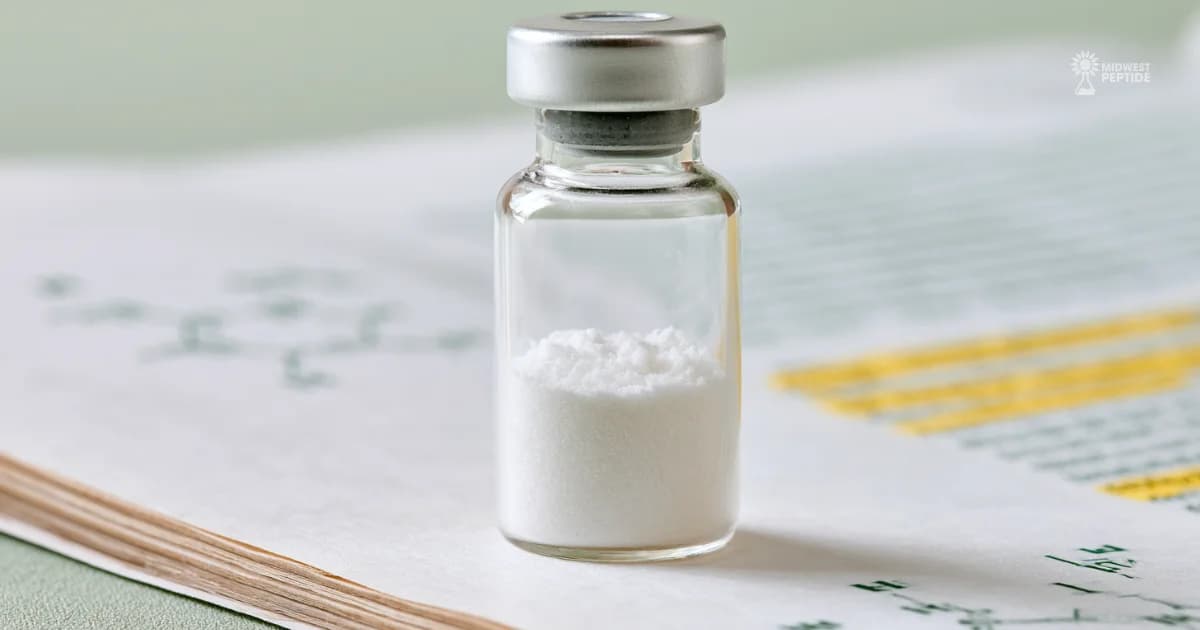
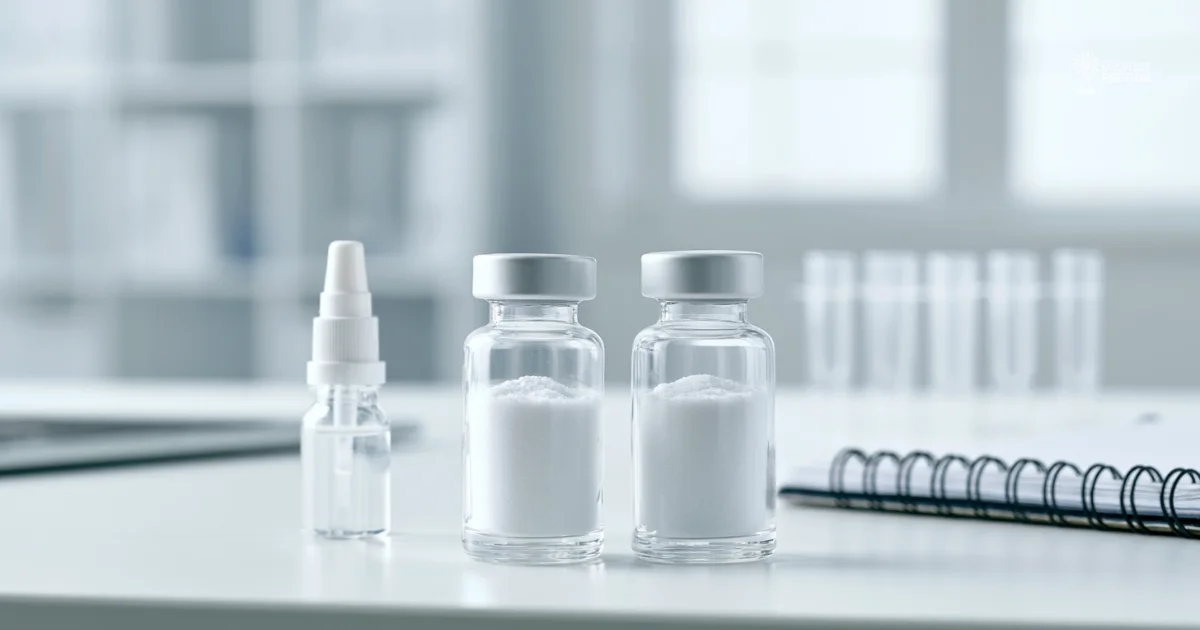
"What's the cheapest way to get tirzepatide?" is a common question from research labs working on tight budgets. The honest answer is that the cheapest research-grade tirzepatide (sold as GLP-2 TZ) usually comes with reduced analytical documentation, and the cost savings come at the expense of research utility. This guide walks through what tirzepatide pricing actually looks like in 2026, what factors drive the variation across suppliers, and how to think about budget decisions when sourcing material for research designs that require batch consistency and reproducibility.
This is a research-context article. All discussion is framed around laboratory and in-vitro use. Nothing here describes or recommends therapeutic, prescription, or compounded use of tirzepatide in humans. For the regulatory framework around compounded tirzepatide specifically, see Can I Still Buy Compounded Tirzepatide?.
Typical 2026 Pricing for Research-Grade Tirzepatide
Research-grade tirzepatide (GLP-2 TZ) in 2026 typically prices in the following ranges:
- 30mg lyophilized vial: $200 to $500 from reputable RUO suppliers with full analytical documentation. Lower-end pricing typically reflects high-volume suppliers with strong batch turnover; higher-end pricing reflects suppliers with extensive analytical verification including mass spectrometry confirmation of the C20 diacid fatty acid modification.
- Bulk and recurring purchase pricing: per-vial costs decrease for orders of multiple vials or for established recurring purchase relationships. Volume pricing programs typically reduce per-unit cost by 10 to 25 percent depending on supplier and quantity.
- Multi-vial research designs: research labs running comparative studies that include tirzepatide alongside GLP-1 SM (Semaglutide) and GLP-3 RT (Retatrutide) often benefit from sourcing all three from the same supplier with consolidated pricing.
These ranges describe research-grade material with batch-specific Certificates of Analysis. Clinical tirzepatide (sold under brand names under FDA approval) operates in a separate regulated channel with different pricing dynamics, and is not the subject of this guide. For the broader question of sourcing tirzepatide for research, see Where to Buy Tirzepatide (GLP-2 TZ) for Research: Sourcing Guide.
Why Tirzepatide Is More Expensive Than Smaller Peptides
The synthesis economics of tirzepatide are fundamentally different from those of small peptides like GHK-Cu or BPC-157:
Length. Tirzepatide is a 39-amino-acid peptide. Solid-phase peptide synthesis cost scales with chain length because each additional amino acid requires a coupling cycle, a deprotection step, and verification. A 39-residue peptide costs substantially more to synthesize per milligram than a 15-residue peptide.
Fatty acid acylation. Tirzepatide includes a C20 diacid (eicosanedioic acid) fatty acid modification attached via a linker at a specific lysine residue. The acylation step requires controlled chemistry and adds manufacturing complexity beyond the basic peptide synthesis. Verification that the modification is present, correctly attached, and structurally intact requires mass spectrometry on every batch.
Modified amino acid residues. Tirzepatide contains non-canonical amino acids in the sequence that confer DPP-IV resistance and shape receptor selectivity. These modified residues require specific protected building blocks during synthesis.
Analytical verification. The complete analytical workup for tirzepatide includes HPLC purity verification, mass spectrometry molecular weight match, fatty acid modification confirmation, peptide content quantification, and endotoxin testing. The analytical depth is substantially greater than what smaller research peptides require.
The combined effect is that tirzepatide synthesis and quality verification cost 5 to 20 times more per milligram than for small peptides like GHK-Cu. The pricing reflects this synthesis economics, not arbitrary supplier markup.
For the broader category context on modified peptides, see Peptide Modifications: PEGylation, Lipidation, and Cyclization.
What Cheap Tirzepatide Actually Costs
When research labs see tirzepatide priced significantly below the typical research-grade range, several specific quality concerns are common:
Generic COAs. Lower-priced suppliers often ship tirzepatide with generic supplier-wide Certificates of Analysis that do not match a specific batch. A research lab cannot verify that the material received corresponds to the analytical results on the COA without batch-specific documentation.
Missing mass spectrometry verification. HPLC purity alone is insufficient for tirzepatide because the C20 diacid fatty acid modification is structurally critical. Mass spectrometry molecular weight match is the only way to confirm that the fatty acid modification is intact. Suppliers that omit mass spec testing cannot verify this critical structural feature.
Below-spec HPLC purity. Some lower-priced suppliers ship tirzepatide at HPLC purity below the 98 percent research-grade standard. Reduced purity means more impurities (deletion sequences, oxidation products, incomplete acylation) that can produce off-target effects in research models.
Missing fatty acid modification verification. Even when mass spectrometry is included, some suppliers do not specifically verify that the C20 diacid fatty acid is present and correctly attached. A mass that comes in low (suggesting the fatty acid modification is missing) compromises the molecule's pharmacokinetic profile and its research utility.
Missing endotoxin testing. For in-vivo research applications, endotoxin testing under 5 EU/mg is the standard expectation. Lower-priced suppliers often omit this, limiting the material's research applicability.
Inconsistent batch quality. Suppliers competing primarily on price often achieve that price by accepting more batch-to-batch variability, which compromises long-term research projects requiring consistent quality.
The result is that "cheap tirzepatide" frequently fails to provide the analytical confidence needed for research. The material may work in some experiments but fail in others without explanation, because the underlying batch-to-batch quality is not verified.
How to Source Tirzepatide on a Real Research Budget
Research labs working with limited budgets can manage tirzepatide costs without compromising analytical quality through several strategies:
Source from suppliers with high batch volume. Suppliers moving high research peptide volumes can pass economies of scale to customers while maintaining full analytical documentation. Volume-driven pricing is sustainable; corner-cutting on documentation is not.
Negotiate volume or recurring pricing. For research projects requiring multiple vials over time, establishing a recurring purchase relationship can reduce per-vial cost by 10 to 25 percent compared to one-off orders. The supplier benefits from predictable demand; the research lab benefits from price stability and batch consistency across the project.
Plan reconstitution and aliquoting carefully. Reconstituted tirzepatide is stable for approximately 28 to 30 days at 2 to 8 degrees Celsius. Researchers who plan their reconstitution and aliquoting workflow against the documented stability window can stretch each vial's research utility without unnecessary repeat purchases.
Source comparable materials together. Research designs combining tirzepatide with semaglutide and retatrutide for comparative arms benefit from sourcing all three from the same supplier with consolidated pricing and matched analytical specifications. This is more economical than multi-vendor sourcing in most cases.
Verify analytical specifications before optimizing for price. The right comparison metric is not price alone, but value relative to analytical depth. A vial at $300 with full HPLC + mass spec + fatty acid verification + endotoxin testing is a different value proposition than a vial at $200 with only HPLC. Compare like to like.
What Midwest Peptide Tirzepatide Pricing Includes
Every GLP-2 TZ (Tirzepatide) order from Midwest Peptide ships with:
- Batch-specific Certificate of Analysis documenting lot number, HPLC purity above 98 percent, mass spectrometry molecular weight match, C20 diacid fatty acid modification verification, peptide content quantification, and synthesis date.
- Lyophilized 30mg vial in insulated packaging engineered for transit stability.
- Same-business-day order processing for orders placed by 2 PM Central, with free domestic shipping.
- Direct customer support for questions about COA details, batch availability, or analytical results, typically answered same business day.
- Multiple secure payment options.
- Full RUO disclaimer language on the product page, packaging, and order confirmation.
For the broader sourcing framework that applies to evaluating any tirzepatide supplier, see the Where to Buy Tirzepatide (GLP-2 TZ) for Research: Sourcing Guide. For the vendor-neutral framework across the broader research peptide market, see the Most Reliable Peptide Company sourcing guide.
Comparative Research Designs and Pricing
Research labs running comparative studies across the incretin agonist class often benefit from consolidating sourcing. A typical comparative design with vehicle, single, dual, and triple agonist arms requires:
- Vehicle (bacteriostatic water): minimal cost
- GLP-1 SM (Semaglutide) 20mg: single GLP-1 receptor agonist arm
- GLP-2 TZ (Tirzepatide) 30mg: dual GLP-1/GIP receptor agonist arm
- GLP-3 RT (Retatrutide): triple agonist arm
Sourcing all four from a single supplier with matching analytical specifications reduces variability that would otherwise be introduced by multi-vendor sourcing, and most suppliers offer some pricing relief on consolidated multi-vial orders. For the comparative research framework, see Single vs Dual Incretin Agonists and Dual vs Triple Incretin Agonists.
External References for Tirzepatide Pricing Context
For external authoritative context on tirzepatide and the broader incretin agonist market:
- The Wikipedia entry on tirzepatide summarizes the published clinical and preclinical literature.
- The Endocrine Society provides peer-reviewed coverage of incretin pharmacology and the broader development landscape.
- Peer-reviewed coverage of tirzepatide is published in Nature Medicine and The Lancet Diabetes & Endocrinology.
- Methodological references on long-acting peptide synthesis and modification chemistry are at ScienceDirect and American Chemical Society journals.
Bottom Line
The cheapest research-grade tirzepatide is rarely the best value. The synthesis economics of a 39-amino-acid peptide with C20 diacid fatty acid acylation set a floor on what reliable analytical documentation costs. Suppliers that price substantially below the typical $200 to $500 per 30mg vial range usually achieve that price by reducing analytical depth, accepting batch variability, or omitting fatty acid modification verification. For research applications that require reproducibility and confidence in the material, the right approach is to compare price against analytical specifications rather than against price alone, and to consolidate sourcing across the comparative incretin agonist arms when possible.
For research-grade tirzepatide with full analytical documentation, see the GLP-2 TZ (Tirzepatide) product page and the broader Midwest Peptide research catalog. All products are supplied strictly for laboratory and in-vitro research use only. Not for human consumption.
Related Research Reading
Within the cluster:
- Pillar: GLP-2 TZ in Research: A Dual GLP-1/GIP Receptor Agonist Literature Review
- Dual Incretin Receptor Activation: GLP-1 and GIP Combined Mechanism
- GIP Receptor Biology: The Second Incretin in Research
- Tirzepatide Beta-Cell Research: Pancreatic Function Animal Model Studies
- Tirzepatide Hepatic Research: NAFLD and Steatosis Literature
- Single vs Dual Incretin Agonists: Comparative Research Literature
- Where to Buy Tirzepatide (GLP-2 TZ) for Research: Sourcing Guide
- Most Reliable Peptide Company: A Researcher's 2026 Sourcing Guide