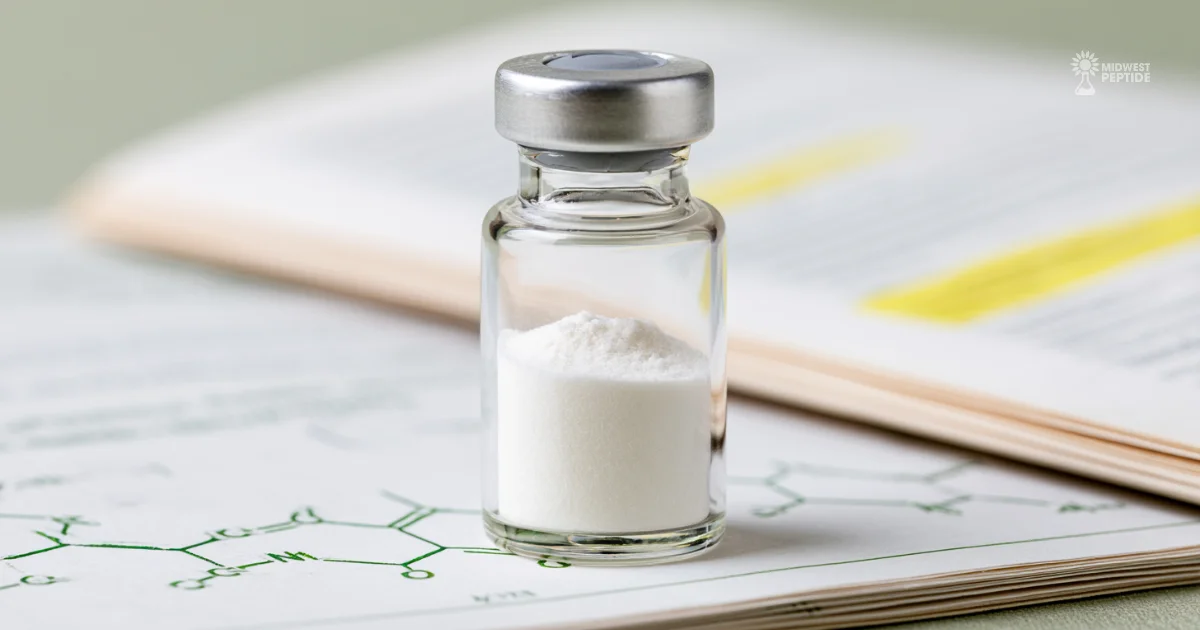
One of the most-asked questions about tirzepatide in 2026 is "can I still buy compounded tirzepatide?" The short answer for therapeutic use is largely no: the FDA officially resolved the tirzepatide shortage in 2024 to 2025, which under FDA Section 503A and 503B compounding rules generally restricts pharmacies from preparing tirzepatide for human use. The longer answer is that this regulatory status applies only to the compounded therapeutic channel. The Research Use Only research peptide channel for tirzepatide (sold as GLP-2 TZ) operates under entirely separate regulations and is unaffected by the compounding restrictions.
This guide walks through the regulatory landscape, explains why compounded tirzepatide is largely no longer available, and clarifies the structural differences between compounded therapeutic tirzepatide and research-grade GLP-2 TZ. All discussion is framed in research-context terms. Nothing here describes or recommends therapeutic, prescription, or compounded use of tirzepatide in humans.
The FDA Compounding Framework Explained
Compounding pharmacies in the United States operate under two FDA provisions:
- Section 503A governs traditional compounding pharmacies that prepare customized medications for individual patients under physician prescription. State boards of pharmacy regulate these facilities, with FDA oversight for federal compliance.
- Section 503B governs outsourcing facilities that prepare compounded medications for office use without patient-specific prescriptions. These facilities register with and are inspected by the FDA directly.
Both 503A and 503B compounding are subject to specific FDA rules about what drug substances can be compounded. The key constraint: a drug can generally be compounded only if it is on the official FDA shortage list, on the bulk drug substances list approved for compounding, or for individual patient circumstances where the FDA has approved a specific exemption. Tirzepatide is not on the bulk drug substances list approved for compounding, so its availability for compounding has been tied to the shortage list.
The Tirzepatide Shortage and Its Resolution
Tirzepatide entered the market in 2022 as the first FDA-approved dual GLP-1/GIP receptor agonist therapy. Demand outpaced manufacturing capacity through 2023 and into 2024, leading the FDA to add tirzepatide to its official drug shortage list. During the shortage period, compounding pharmacies could prepare tirzepatide for human therapeutic use under Section 503A and 503B rules, leveraging the shortage exception that allows compounding when an approved drug is unavailable in adequate supply.
The shortage was officially resolved in late 2024 as manufacturing capacity caught up with demand. This resolution had immediate regulatory consequences: under FDA compounding rules, when a drug shortage ends, the regulatory permission to compound that drug for human therapeutic use also ends. The FDA notified compounding pharmacies and outsourcing facilities of the change and provided wind-down timelines for existing compounded inventory. By 2026, broad compounded tirzepatide access for human therapeutic use is largely no longer legally available through Section 503A or 503B channels.
This is the reason "can I still buy compounded tirzepatide" returns search volume in 2026: many people who accessed compounded tirzepatide during the shortage are looking for alternative sources, and the answer in the therapeutic channel is that the option has largely closed.
Research Use Only Tirzepatide Operates in a Separate Channel
Research peptide tirzepatide, sold as GLP-2 TZ under Research Use Only labeling, operates in a regulatory channel that is structurally separate from compounded therapeutic tirzepatide. The differences are fundamental:
Different regulatory framework. Compounded tirzepatide is regulated by FDA compounding rules (Sections 503A and 503B). RUO research peptides are not drugs and are not regulated under compounding rules; they fall under research reagent and laboratory chemical regulations.
Different intended use. Compounded tirzepatide was prepared for human therapeutic use under physician prescription. RUO tirzepatide is sold for laboratory and in-vitro research only, with explicit research-only labeling and disclaimers.
Different supply chain. Compounded tirzepatide came through state-licensed compounding pharmacies. RUO tirzepatide comes through research peptide suppliers that manufacture under research-grade specifications and ship to qualified researchers.
Different documentation. Compounded tirzepatide came with prescription labels and pharmacy dispensing records. RUO tirzepatide ships with batch-specific Certificates of Analysis, HPLC purity verification, mass spectrometry identity confirmation, and confirmation of the C20 diacid fatty acid modification.
Different end users. Compounded tirzepatide was dispensed to patients. RUO tirzepatide is sold to research labs, academic researchers, and contract research organizations for laboratory and in-vitro work.
The two channels have always been separate. The compounding restrictions that took effect after the shortage resolution affect only the therapeutic channel. The RUO research peptide channel was never affected and continues to operate normally.
For the broader sourcing framework, see Where to Buy Tirzepatide (GLP-2 TZ) for Research: Sourcing Guide.
What Research Labs Source for Tirzepatide Research
Research labs working on tirzepatide pharmacology source GLP-2 TZ from research peptide suppliers under analytical specifications matching the published research literature. The standard analytical workup includes:
- HPLC purity above 98 percent. Confirms the peptide is the dominant species in the material, with related impurities (deletion sequences, oxidation products, incomplete acylation) properly quantified.
- Mass spectrometry molecular weight match. Tirzepatide's theoretical molecular weight is approximately 4814 Da, accounting for the 39-amino-acid sequence and the C20 diacid fatty acid modification. Mass spec confirmation matches against this theoretical mass.
- Fatty acid modification verification. The C20 diacid acylation is structurally critical to tirzepatide's pharmacokinetic profile. Mass spec or other analytical methods confirm the modification is present and correctly attached.
- Peptide content quantification. Reports the actual peptide mass per vial, accounting for counter-ions and bulking agents.
- Endotoxin testing. For in-vivo research applications, typically under 5 EU/mg.
This is the analytical framework that the published tirzepatide research literature uses. See Tirzepatide Beta-Cell Research: Pancreatic Function Animal Model Studies and Tirzepatide Hepatic Research: NAFLD and Steatosis Literature for cluster-specific research coverage.
How Research Peptide Tirzepatide Differs From Compounded Therapeutic Tirzepatide
For clarity, the operational differences between the two products:
Compounded therapeutic tirzepatide (during the shortage period, now largely restricted):
- Prepared by state-licensed compounding pharmacy
- Dispensed under physician prescription for human therapeutic use
- Labeled as a prescription drug
- Subject to pharmacy compounding rules and oversight
- Quality controls per Section 503A or 503B requirements
- Sold to individual patients
- Cost typically several hundred dollars per month-equivalent supply
RUO research peptide tirzepatide (GLP-2 TZ):
- Manufactured under research peptide specifications
- Sold to qualified researchers for laboratory and in-vitro research only
- Labeled as Research Use Only with explicit RUO disclaimers
- Subject to research reagent and laboratory chemical regulations
- Quality controls via batch-specific Certificate of Analysis (HPLC, mass spec, fatty acid verification, endotoxin testing)
- Sold to research labs, academics, and CROs
- Cost in the typical $200 to $500 range per 30mg vial
The two products use the same molecule (tirzepatide) but serve completely different purposes under different regulations. They are not interchangeable. A research lab cannot use compounded therapeutic tirzepatide for research applications because it lacks the analytical documentation that research requires. A patient cannot legally use RUO research peptide tirzepatide for therapeutic use because it is not labeled, manufactured, or regulated for human consumption.
For the pricing context across the research peptide market, see What's the Cheapest Way to Get Tirzepatide (GLP-2 TZ) for Research?.
What Comes With RUO Tirzepatide From Reliable Suppliers
Every GLP-2 TZ (Tirzepatide) order from Midwest Peptide ships with:
- Batch-specific Certificate of Analysis documenting lot number, HPLC purity above 98 percent, mass spectrometry molecular weight match, C20 diacid fatty acid modification verification, peptide content quantification, and synthesis date.
- Lyophilized 30mg vial in insulated packaging engineered for transit stability.
- Same-business-day order processing for orders placed by 2 PM Central, with free domestic shipping.
- Direct customer support for questions about COA details, batch availability, or analytical results.
- Multiple secure payment options.
- Full RUO disclaimer language on the product page, packaging, and order confirmation.
The accompanying Where to Buy Tirzepatide (GLP-2 TZ) for Research: Sourcing Guide walks through the supplier evaluation criteria. For the vendor-neutral framework across the broader research peptide market, see the Most Reliable Peptide Company sourcing guide.
External References for Compounding and Regulatory Context
For external authoritative context on FDA compounding regulations and the tirzepatide shortage resolution:
- The Wikipedia entry on tirzepatide summarizes the molecule's clinical history.
- The Endocrine Society provides peer-reviewed coverage of incretin pharmacology and regulatory developments relevant to the shortage and resolution.
- Peer-reviewed regulatory and policy coverage of pharmaceutical compounding is published in Nature Medicine and academic policy journals.
- General incretin agonist research and regulatory background is at The Lancet Diabetes & Endocrinology.
Bottom Line
Compounded tirzepatide for human therapeutic use is largely no longer available in 2026 because the FDA officially resolved the tirzepatide shortage in 2024 to 2025, ending the regulatory permission for compounding under FDA Sections 503A and 503B. This restriction applies only to the compounded therapeutic channel. The Research Use Only research peptide channel for tirzepatide (sold as GLP-2 TZ) operates under entirely separate regulations, is unaffected by the compounding restrictions, and continues to supply research labs with batch-verified material under analytical specifications appropriate for laboratory and in-vitro research.
If your interest is therapeutic, the appropriate channel is FDA-approved branded tirzepatide dispensed under physician prescription, not compounding or research peptide channels. If your interest is research, RUO suppliers like Midwest Peptide ship GLP-2 TZ (Tirzepatide) with batch-specific Certificates of Analysis on every order. All products are supplied strictly for laboratory and in-vitro research use only. Not for human consumption.
Related Research Reading
Within the cluster:
- Pillar: GLP-2 TZ in Research: A Dual GLP-1/GIP Receptor Agonist Literature Review
- Dual Incretin Receptor Activation: GLP-1 and GIP Combined Mechanism
- GIP Receptor Biology: The Second Incretin in Research
- Tirzepatide Beta-Cell Research: Pancreatic Function Animal Model Studies
- Tirzepatide Hepatic Research: NAFLD and Steatosis Literature
- Single vs Dual Incretin Agonists: Comparative Research Literature
- Where to Buy Tirzepatide (GLP-2 TZ) for Research: Sourcing Guide
- Most Reliable Peptide Company: A Researcher's 2026 Sourcing Guide