Yes. Researchers can buy retatrutide as GLP-3 RT through the Research Use Only research peptide market for laboratory and in-vitro work. The molecule is in late-stage clinical trials but is not yet FDA approved as a prescription therapy, so the only legal channel for material outside the formal clinical trial program is the RUO supply chain. This guide walks through how that purchase actually works in practice: what to expect from a reliable supplier, what documentation to require on every order, what pricing looks like in 2026, and how to evaluate one supplier against another.
This is a research-context article. All discussion is framed around laboratory and in-vitro use. Nothing here describes or recommends therapeutic use of retatrutide in humans or animals.
What "Buying Retatrutide" Looks Like in Practice
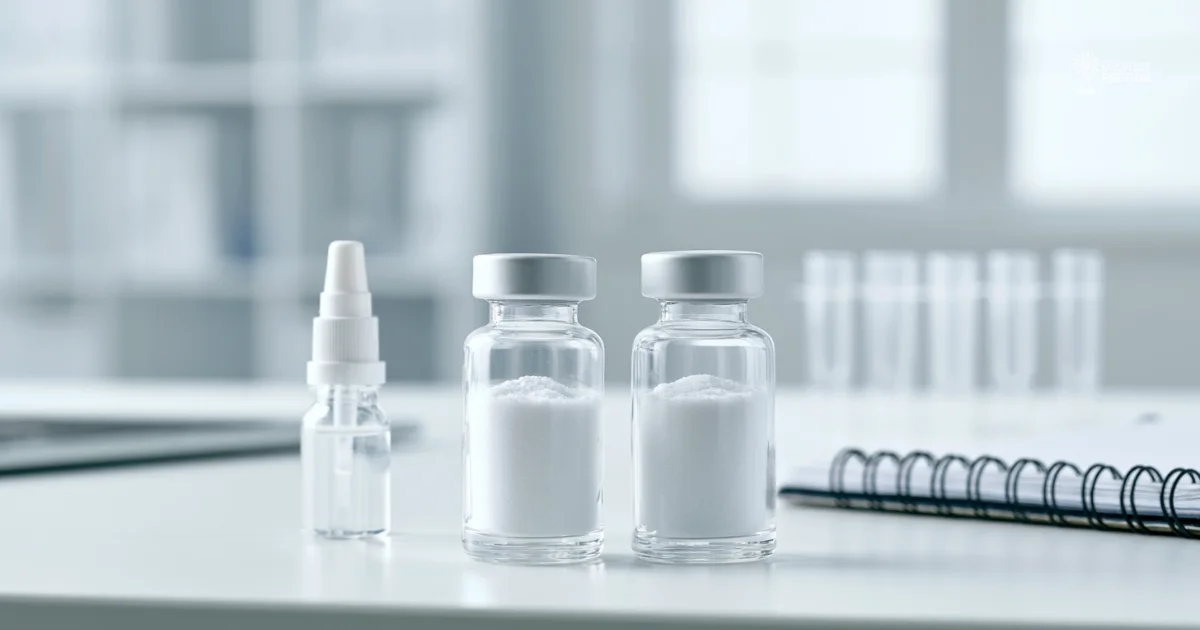
A research lab buying GLP-3 RT goes through the same operational workflow as buying any other research peptide. The lab visits a supplier's website, selects the GLP-3 RT product (typically a 10 mg lyophilized vial), confirms that the order is for research use only, and completes payment. The supplier then ships the lyophilized vial via insulated packaging with appropriate transit temperature controls. The shipment arrives with a batch-specific Certificate of Analysis documenting the analytical specifications of that exact lot.
This is the same workflow that applies to ordering BPC-157 10mg, TB-500 10mg, or any other research peptide in the market. The GLP-3 RT product page at Midwest Peptide explicitly lists the molecule alongside its INN (retatrutide) and the alternate naming variants (GLP3RT, GLP-3-RT, RT peptide, GLP3-RT) that researchers might search under.
For the broader regulatory context on retatrutide's current status, see How Are People Getting Retatrutide (GLP-3 RT)?.
What to Require on Every Order
Buying retatrutide for research means demanding analytical documentation on every order. The non-negotiable items:
Batch-specific Certificate of Analysis. Every shipment should reference the specific lot number being shipped and report the analytical results for that lot. A generic supplier-wide COA that does not match a specific batch is insufficient. Reputable suppliers attach the COA to the shipment confirmation email and include it in the package.
HPLC purity above 98 percent. The COA should show a chromatogram with a dominant single peak above 98 percent of total UV absorbance at 220 nm. Below this threshold, related impurities (deletion sequences, oxidation products, truncated chains) can produce off-target effects in research models that confound mechanism studies.
Mass spectrometry molecular weight match. Retatrutide's theoretical molecular weight is approximately 4937 Da accounting for the 39-amino-acid sequence and the C20 diacid fatty acid modification. The mass spec result should match within tolerance. A result that comes in low suggests the fatty acid modification is missing; a result significantly off-target suggests sequence errors. For a deeper view of LC-MS verification methodology, see the peptide bioanalysis research guide.
Peptide content quantification. The COA should report the actual peptide content as a percentage of the total mass in the vial. A 10 mg vial of GLP-3 RT contains a quantified mass of retatrutide plus counter-ions, residual solvents, and (in lyophilized formulations) bulking agents. Without this quantification, researchers cannot calculate accurate concentrations from the labeled vial mass.
Endotoxin testing where applicable. For research designs involving in-vivo administration in animal models, endotoxin testing under 5 EU/mg is the standard expectation. Pure in-vitro applications may have different thresholds, but the testing should be available.
What Pricing Looks Like in 2026
Research-grade GLP-3 RT pricing in 2026 reflects three factors: synthesis cost (retatrutide's 39-amino-acid sequence with C20 diacid modification is more expensive to manufacture than shorter peptides), batch demand (high research interest sustains volume pricing), and supplier quality positioning (suppliers offering full analytical documentation generally price above suppliers offering minimal documentation).
Typical research-grade GLP-3 RT 10 mg vials price in the range of $200 to $500 depending on supplier. Bulk and recurring-purchase pricing varies. The cheapest material is not always the most reliable; the analytical specifications on the COA matter more than the headline price. A vial that ships with a generic COA, missing fatty acid modification verification, or absent endotoxin testing represents a different value proposition than a vial that ships with full documentation.
For a broader view of pricing structure across research peptide categories, see the Most Reliable Peptide Company sourcing guide.
How to Evaluate One Supplier Against Another
When comparing GLP-3 RT suppliers, the seven criteria from the Most Reliable Peptide Company sourcing guide apply directly:
- Analytical depth: does every batch include HPLC and mass spectrometry verification, with the actual data attached to the COA?
- Operational consistency: does the supplier ship same-business-day with predictable transit times?
- Support quality: can the support team answer questions about COA details and batch availability with technical familiarity?
- Catalog breadth: does the supplier carry the broader incretin agonist family alongside GLP-3 RT, supporting comparative research designs?
- Verifiable third-party reviews: what does Trustpilot and similar platforms show about the supplier's operational track record?
- Transparent INN disclosure: does the supplier explicitly map GLP-3 RT to retatrutide, or hide behind catalog naming?
- RUO labeling and compliance: is the research-use-only framing clear and consistent throughout the website and product packaging?
A supplier that scores well on all seven is reliable. A supplier that misses on two or three is a higher-risk choice for research projects that require batch consistency and reproducibility.
What Comes With Buying GLP-3 RT From Midwest Peptide
Every GLP-3 RT (Retatrutide) order from Midwest Peptide ships with:
- Batch-specific Certificate of Analysis documenting the lot number, HPLC purity result, mass spectrometry molecular weight, peptide content quantification, and synthesis date.
- Lyophilized 10 mg vial in insulated packaging engineered for the realities of peptide transit.
- Same-business-day order processing for orders placed by 2 PM Central, with free domestic shipping to U.S. addresses.
- Direct customer support for questions about the COA, batch availability, or analytical results, typically answered same business day.
- Multiple secure payment options (Zelle with discount, Cash App, Venmo, Azeban Pay, and cryptocurrency through Coinbase Commerce).
- Full RUO disclaimer language on the product page, packaging, and order confirmation.
The accompanying Where to Buy Retatrutide (GLP-3 RT) for Research: Sourcing Guide walks through Midwest Peptide's GLP-3 RT documentation in detail.
Storage, Stability, and Use After Purchase
Research-grade GLP-3 RT ships in lyophilized form. Standard storage guidance is minus 20 degrees Celsius for unopened lyophilized vials, protected from light and moisture. After reconstitution in bacteriostatic water, most retatrutide preparations are stable for approximately 28 to 30 days at 2 to 8 degrees Celsius, though peptide-specific stability data should be verified against the supplier's documentation.
The C20 diacid fatty acid modification gives retatrutide reasonable stability under refrigeration, but exposure to room temperature over extended periods or repeated freeze-thaw cycles can degrade the molecule and reduce its effective concentration. For research timelines that span weeks, planning the reconstitution and aliquoting workflow against the documented stability window is part of standard research peptide handling. The GLP-3 RT lab safety and handling protocols post covers the broader handling framework.
Cross-Cluster Considerations for Comparative Research
Many research labs that buy GLP-3 RT also buy GLP-1 SM (Semaglutide) and GLP-2 TZ (Tirzepatide) for comparative work. Sourcing all three from a single supplier with consistent analytical specifications and documentation reduces variability that would otherwise be introduced by multi-vendor sourcing. For more on the comparative design framework, see Dual vs Triple Incretin Agonists: Comparative Research Literature and Comparative Analysis: GLP-3 RT vs. Traditional GLP-Class Peptides.
External References for Retatrutide Buying Context
For external context on retatrutide development status:
- The Wikipedia overview of retatrutide summarizes published clinical trial data and regulatory status.
- Cell Metabolism covers primary research on incretin pharmacology and clinical trial outcomes.
- Peer-reviewed coverage of incretin agonist development is at Nature Medicine and The Lancet Diabetes & Endocrinology.
- Research peptide methodology references are available at ScienceDirect.
Bottom Line
Researchers can buy retatrutide as GLP-3 RT through the Research Use Only research peptide market. The legal framework is clear: RUO research peptides are sold to qualified researchers for laboratory and in-vitro use, with explicit research-only labeling and analytical documentation on every batch. Reliable suppliers ship batch-specific Certificates of Analysis, HPLC purity verification, mass spectrometry molecular weight confirmation, and consistent operational fulfillment.
For research-grade GLP-3 RT (Retatrutide) ready to ship with batch-specific COA, see the GLP-3 RT product page and the broader research peptide catalog. All products are supplied strictly for laboratory and in-vitro research use only. Not for human consumption.
Related Research Reading
Within the cluster:
- Pillar: GLP-3 RT in Research: A Triple GLP-1/GIP/Glucagon Receptor Agonist Literature Review
- Triple Incretin Receptor Activation: GLP-1, GIP, and Glucagon Combined Mechanism
- Glucagon Receptor in Triagonist Research: Energy Expenditure Pathways
- Retatrutide Energy Expenditure Research: Thermogenesis Animal Model Studies
- Retatrutide Lipid Profile Research: Hepatic Steatosis Literature
- Dual vs Triple Incretin Agonists: Comparative Research Literature
- Comparative Analysis: GLP-3 RT vs. Traditional GLP-Class Peptides
- Where to Buy Retatrutide (GLP-3 RT) for Research: Sourcing Guide
- Most Reliable Peptide Company: A Researcher's 2026 Sourcing Guide