GLP-2 TRZ is a research peptide examined for its interaction with glucagon-like peptide-2 (GLP-2) signaling pathways. Within scientific and laboratory settings, GLP-2 TRZ is studied to better understand intestinal biology, cellular communication, and gastrointestinal pathway regulation. This article provides a research-focused overview of GLP-2 TRZ, explaining its role in experimental models and how it differs from other GLP-based compounds.
Defining GLP-2 TRZ in Research Context
GLP-2 TRZ is a GLP-based peptide developed for research purposes to explore GLP-2 receptor activity. GLP-2 itself is a naturally occurring peptide hormone involved in gastrointestinal signaling. In research environments, GLP-2 TRZ is used as a tool to observe how GLP-2–related pathways influence intestinal structure and function under controlled conditions.
Rather than focusing on systemic metabolic effects, GLP-2 TRZ research centers on localized gastrointestinal signaling. This distinction helps researchers isolate intestinal-specific responses without overlapping variables found in broader GLP pathway studies.
Understanding GLP-2 Signaling Pathways
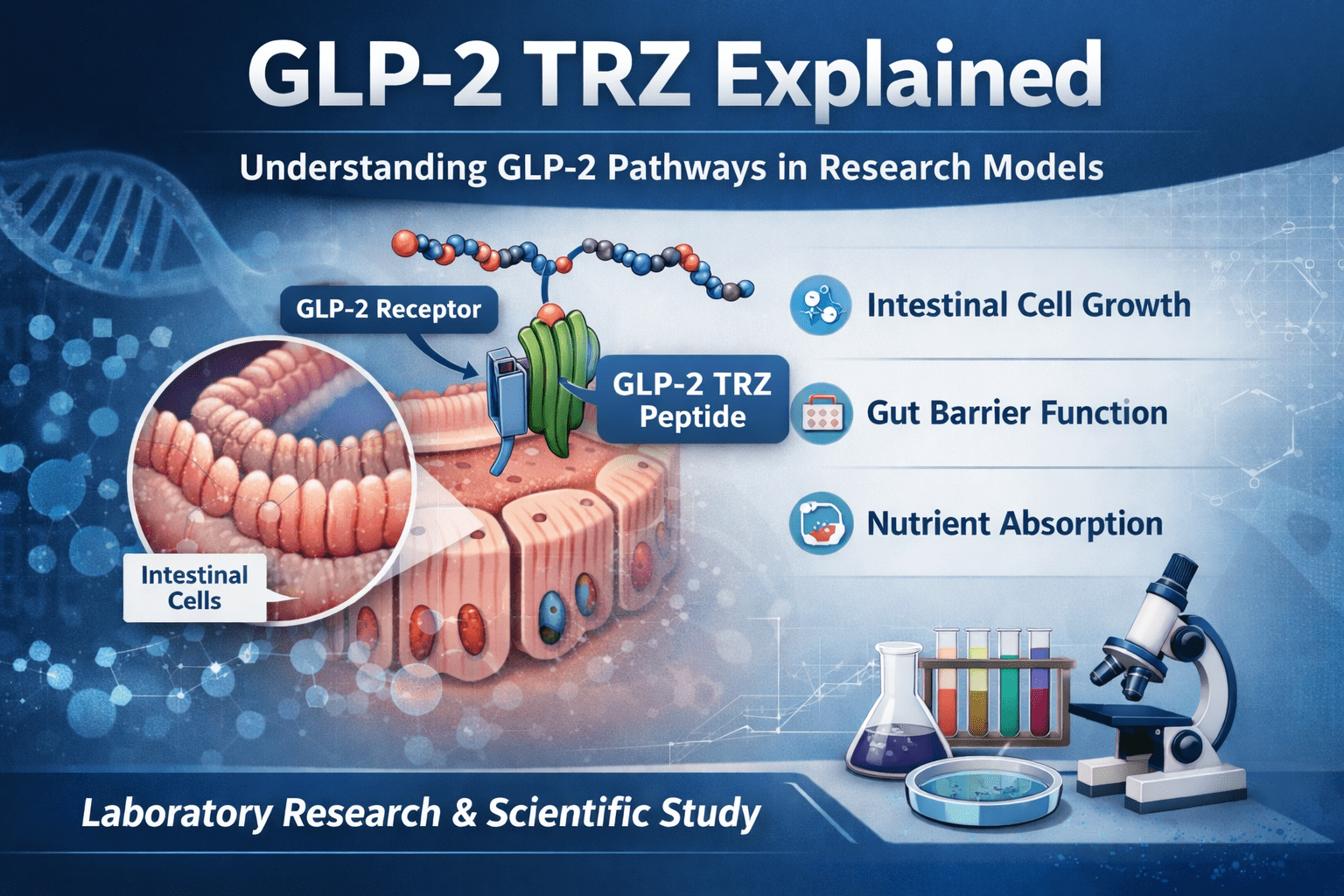
GLP-2 signaling plays an important role in maintaining intestinal balance. In research models, GLP-2 receptor activation is associated with epithelial cell growth, mucosal maintenance, and nutrient transport processes. Scientists study these pathways to better understand how the gut adapts to stress, injury, and changes in nutrient availability.
GLP-2 TRZ allows researchers to observe these signaling processes in a focused manner. By monitoring receptor engagement and downstream cellular responses, research teams can gain insight into how GLP-2–mediated communication supports intestinal function at a biological level.
How GLP-2 TRZ Is Used in Laboratory Studies
Research involving GLP-2 TRZ is conducted in preclinical environments such as in-vitro systems and animal models. These controlled settings allow scientists to analyze peptide-receptor interactions, signaling duration, and tissue-specific effects without external interference.
Primary Areas of Investigation
- Receptor Binding: Studying how GLP-2 TRZ interacts with GLP-2 receptors.
- Cellular Response: Observing changes in intestinal epithelial cells.
- Tissue Adaptation: Examining how intestinal tissues respond to sustained signaling.
- Pathway Isolation: Differentiating gut-specific effects from broader GLP activity.
GLP-2 TRZ Compared to Other GLP-Based Research Peptides
While some GLP-based peptides are studied for their effects on metabolic regulation and systemic signaling, GLP-2 TRZ remains focused on gastrointestinal research. This makes it particularly relevant for studies centered on intestinal physiology rather than whole-body energy balance.
Researchers often select GLP-2 TRZ when their goal is to examine gut-related biological processes without introducing overlapping metabolic variables. This targeted approach supports clearer data interpretation and experimental consistency.
Why GLP-2 TRZ Matters in Scientific Research
Research into GLP-2 TRZ contributes to a broader understanding of how peptide signaling supports intestinal health and function. By studying GLP-2–specific pathways, scientists can refine existing models of gastrointestinal biology and improve the accuracy of experimental frameworks.
These insights help advance foundational knowledge in peptide research and support ongoing exploration into gut-related signaling mechanisms.
Ongoing Research Directions
Current research involving GLP-2 TRZ continues to explore receptor dynamics, signaling efficiency, and tissue-level responses. As laboratory methods advance, GLP-2 TRZ remains a valuable compound for investigating GLP-2–mediated pathways in controlled research settings.
This content is intended for educational purposes and reflects ongoing scientific research. GLP-2 TRZ is referenced exclusively within a laboratory research context.