
Home » The Chemistry of Cognitive Synthesis: A Deep Dive into Semax Research

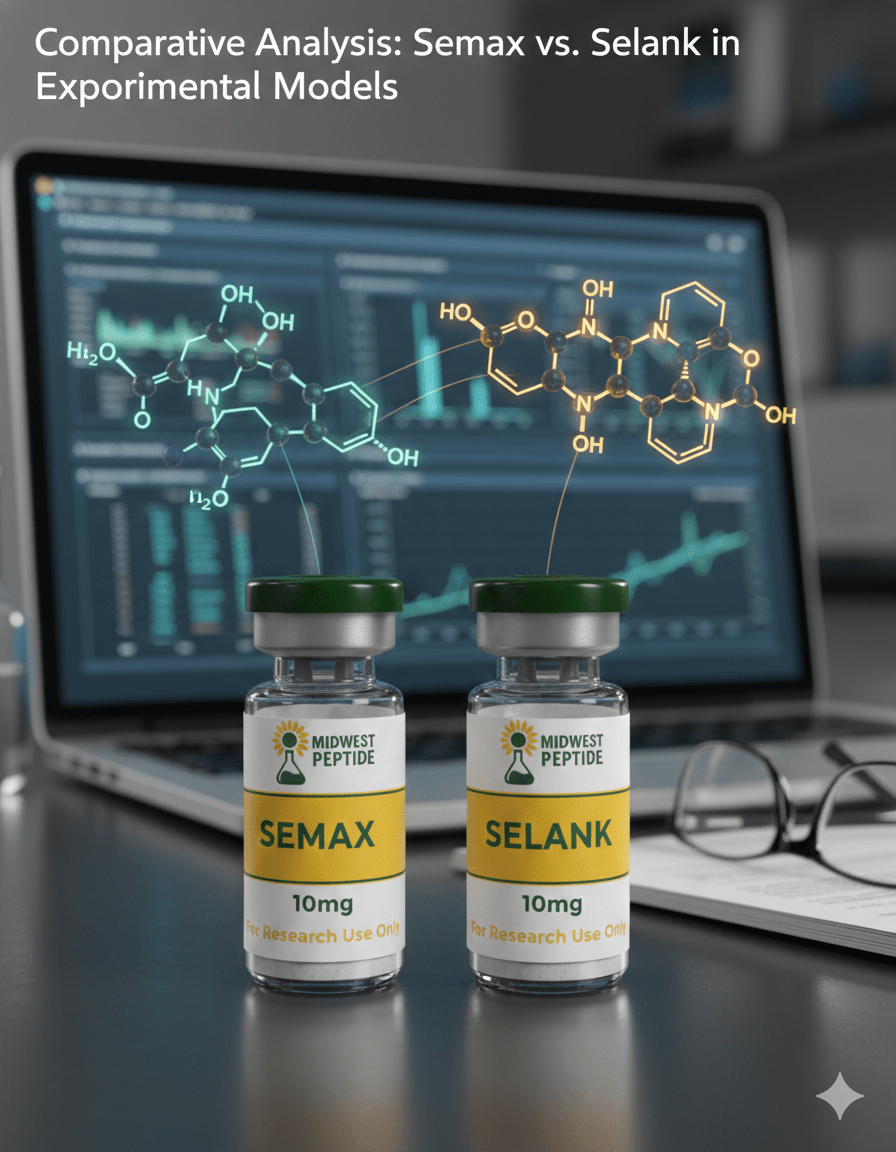
In the evolving landscape of peptide science, few compounds have garnered as much academic interest as Semax. A synthetic heptapeptide, Semax is primarily recognized in laboratory settings for its unique structural relationship to the adrenocorticotropic hormone (ACTH). For researchers in Utah and across the globe, understanding the chemistry of cognitive synthesis through Semax requires a precise look at its molecular makeup, its stability in controlled environments, and its documented interactions within various experimental models.
Semax is a synthetic analogue of the ACTH(4-10) fragment. Its chemical structure is defined as Met-Glu-His-Phe-Pro-Gly-Pro. This specific sequence was engineered to enhance the biological stability of the original ACTH fragment while eliminating its hormonal activity. By modifying the C-terminus with a Pro-Gly-Pro tripeptide, researchers successfully created a compound that resists enzymatic degradation significantly longer than its natural predecessors.
One of the primary focuses of Semax research involves its influence on Brain-Derived Neurotrophic Factor (BDNF) and Nerve Growth Factor (NGF). In vitro studies have consistently shown that the introduction of Semax to neuronal cultures can lead to an upregulation of these essential neurotrophins. Researchers utilize this compound to observe how synthetic peptides might support the survival and differentiation of existing neurons in experimental models.
Semax has been observed to rapidly change the expression of genes related to the immune system and vascular system in brain tissue. Within minutes of application in a laboratory setting, researchers have documented shifts in mRNA levels. This “cognitive synthesis” refers to the peptide’s ability to trigger a cascade of biochemical reactions that reorganize the protein landscape within the test subject’s cellular environment.
Experimental data suggests that Semax interacts with the dopaminergic and serotonergic systems. By modulating the release and uptake of these neurotransmitters, the peptide provides a rich field of study for those investigating the chemical foundations of focus, reward, and stress responses within controlled synthetic environments.
Semax is strictly classified as a “Research Use Only” (RUO) compound. This designation is vital for maintaining the integrity of scientific inquiry. RUO compliance ensures that the peptide is utilized in a manner that adheres to strict safety protocols, preventing it from being mischaracterized as a consumer supplement or medical treatment.
To achieve reproducible results, laboratories must source Semax that meets rigorous purity standards (typically >98% via HPLC analysis). Because this compound is intended for research, its synthesis must be free of the fillers or additives found in pharmaceutical-grade medications, allowing researchers to isolate the effects of the peptide itself.
In the complex world of peptide synthesis, researchers often rely on specialized suppliers who understand the nuances of the “Research Use Only” market. These experts ensure that the Semax provided is synthesized correctly, stored at appropriate temperatures, and labeled with the necessary documentation to satisfy institutional review boards (IRBs) and regulatory standards.
From university labs in Salt Lake City to global research hubs, the fascination with Semax continues to grow. Its ability to act as a catalyst for neurotrophic expression makes it a cornerstone of modern peptide research. By maintaining a focus on chemical properties and cellular mechanisms, the scientific community can continue to unlock the mysteries of cognitive synthesis safely and effectively.
“The synthesis of Semax represents a bridge between endocrinology and neurology. Our goal in the research community is to understand the molecular language of this heptapeptide without overstepping the bounds of clinical application.”
Explore the latest chemical profiles and synthesis data for Semax research. By analyzing the heptapeptide’s unique Pro-Gly-Pro structure and its impact on gene expression, your laboratory can contribute to the global understanding of synthetic neurotrophic analogues—all within a compliant, research-focused framework.
Providing researchers across the nation with the technical insights needed to conduct rigorous, compliant studies on the most promising peptides in modern biochemistry.
Midwest Peptide supplies third-party tested research compounds with verified purity and identity. Based in the Midwest, we support academic and professional research nationwide with fast shipping, transparent lab reports, and consistent quality. Dependable materials.