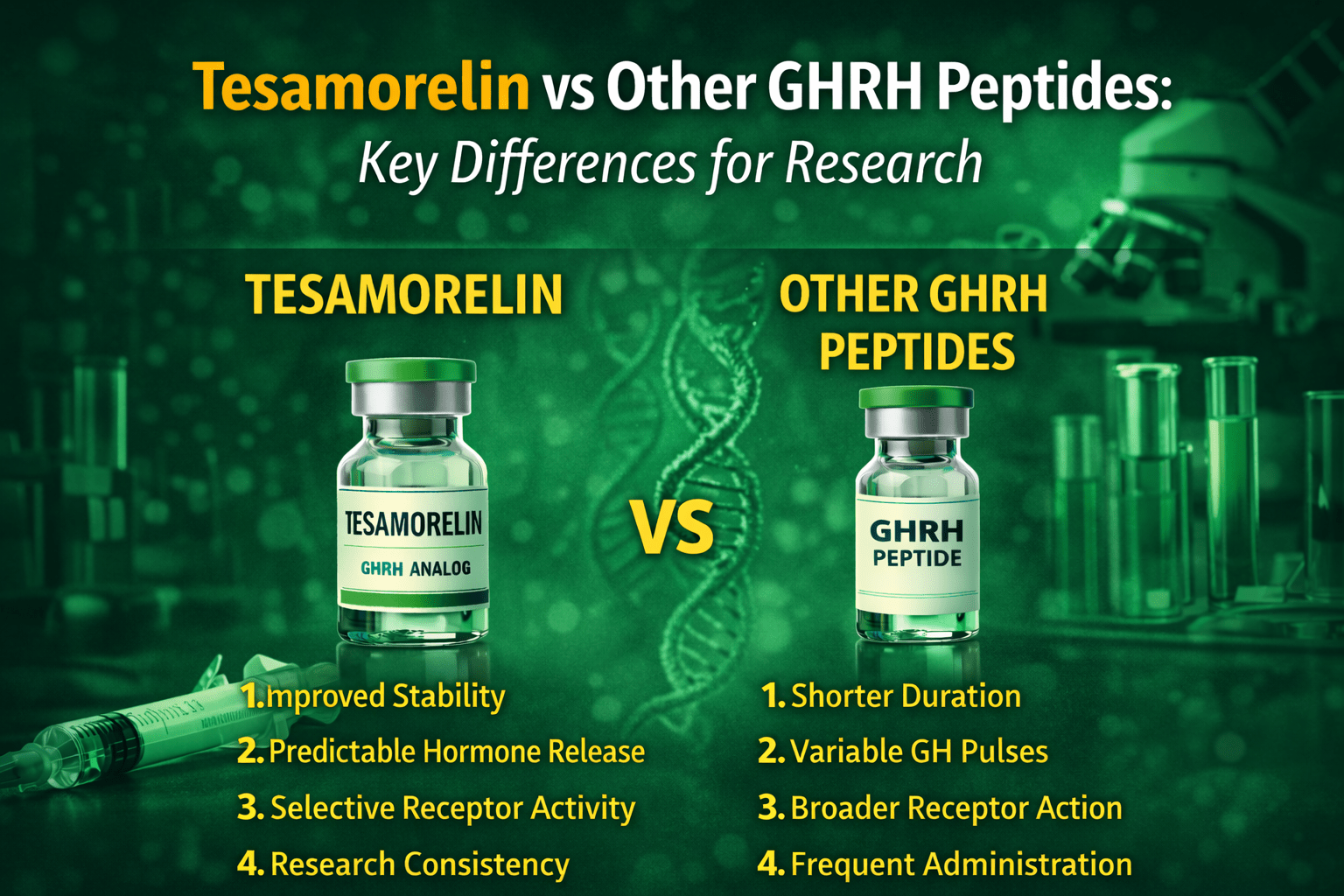
As peptide research continues to evolve, scientists often compare compounds within the same category to better understand their mechanisms and research value. Tesamorelin is frequently evaluated alongside other growth hormone–releasing hormone (GHRH) peptides due to its distinct structure, stability, and signaling behavior.
While all GHRH peptides aim to stimulate endogenous growth hormone release, they are not identical. Differences in molecular design, duration of action, and downstream effects make Tesamorelin stand out in many research settings. Understanding these differences helps researchers choose the most appropriate compound for their specific study goals.
Understanding GHRH Peptides in Research
GHRH peptides function by binding to receptors in the pituitary gland, triggering the release of growth hormone in a pulsatile manner. This approach preserves natural endocrine feedback loops and allows for more physiologically relevant observations compared to direct growth hormone administration.
However, not all GHRH peptides interact with these receptors in the same way. Variations in amino acid sequences can influence receptor affinity, metabolic stability, and the overall consistency of hormone release.
What Makes Tesamorelin Different
Tesamorelin was specifically engineered to improve stability and prolong activity compared to earlier GHRH analogs. Its modified structure allows it to resist rapid enzymatic breakdown, resulting in a more sustained and predictable stimulation of growth hormone release.
This enhanced stability is one of the primary reasons researchers favor Tesamorelin in long-term or repeat-dose studies. More consistent signaling allows for clearer data collection and improved reproducibility across research models.
Key Differences Compared to Other GHRH Peptides
- Improved Stability: Tesamorelin is designed to last longer in circulation.
- Predictable Hormone Release: Encourages consistent growth hormone pulses.
- Selective Receptor Activity: Targets GHRH receptors with high specificity.
- Research Consistency: Supports repeatable outcomes in controlled environments.
Tesamorelin vs Short-Acting GHRH Analogs
Short-acting GHRH peptides may stimulate growth hormone release but often require more frequent administration in research settings. Their rapid breakdown can lead to variability in hormone levels, making long-term outcome measurement more challenging.
In contrast, Tesamorelin’s extended activity allows researchers to observe hormonal effects over a longer window, reducing variability and enhancing study efficiency.
Impact on IGF-1 and Downstream Signaling
Another critical comparison point is how different GHRH peptides influence insulin-like growth factor 1 (IGF-1). Growth hormone stimulates IGF-1 production in the liver, which plays a key role in cellular growth, repair, and metabolic regulation.
Tesamorelin-driven growth hormone release is often studied for its balanced effect on IGF-1 levels, allowing researchers to examine anabolic signaling without excessive or abrupt hormonal spikes.
Choosing the Right GHRH Peptide for Research
- Study Duration: Longer studies often favor more stable peptides like Tesamorelin.
- Hormone Consistency: Predictable signaling improves data quality.
- Research Focus: Metabolic, aging, and regenerative studies benefit from sustained GH release.
- Model Sensitivity: Stable peptides reduce variability in sensitive research models.
Who Benefits Most From Tesamorelin-Based Research
- Researchers conducting long-term growth hormone studies
- Scientists examining metabolic and body composition pathways
- Investigators focused on aging and endocrine regulation
- Laboratories prioritizing consistency and repeatability
Why Tesamorelin Remains a Preferred GHRH Peptide
Among GHRH peptides, Tesamorelin continues to stand out due to its engineered stability, targeted receptor activity, and reliable growth hormone stimulation. These qualities make it especially valuable for researchers seeking controlled, physiologically relevant insights into hormone-driven processes.
As peptide science advances, Tesamorelin remains a benchmark compound for comparing GHRH peptide performance and understanding growth hormone signaling at a deeper level.