Understanding how growth hormone is regulated in the body is a major focus of peptide research. :contentReference[oaicite:0]{index=0} is widely studied because it works with the body’s natural endocrine system rather than bypassing it. As a growth hormone–releasing hormone (GHRH) analog, Tesamorelin provides researchers with a controlled way to examine hormone signaling from the source.
Growth hormone pathways influence metabolism, tissue repair, fat utilization, and overall cellular function. By stimulating endogenous growth hormone release, Tesamorelin allows researchers to observe these pathways in a way that closely mirrors natural physiological conditions.
Understanding Growth Hormone Pathways
Growth hormone is produced in the pituitary gland and released in pulses throughout the day. These pulses are regulated by a balance between growth hormone–releasing hormone (GHRH) and somatostatin, which together control timing, amplitude, and frequency of release.
Once released, growth hormone travels through the bloodstream and interacts with tissues such as muscle, liver, and adipose tissue. One of its primary downstream effects is stimulating the production of insulin-like growth factor 1 (IGF-1), a key signaling molecule involved in growth, repair, and metabolism.
How Tesamorelin Activates These Pathways
Tesamorelin binds directly to GHRH receptors in the pituitary gland. This interaction signals the pituitary to release growth hormone in a pulsatile pattern that closely resembles natural secretion rhythms.
Because Tesamorelin works upstream in the hormonal cascade, it does not replace growth hormone or override feedback mechanisms. Instead, it enhances the body’s own signaling processes, making it an ideal compound for studying regulated hormone activity.
Key Pathways Influenced by Tesamorelin
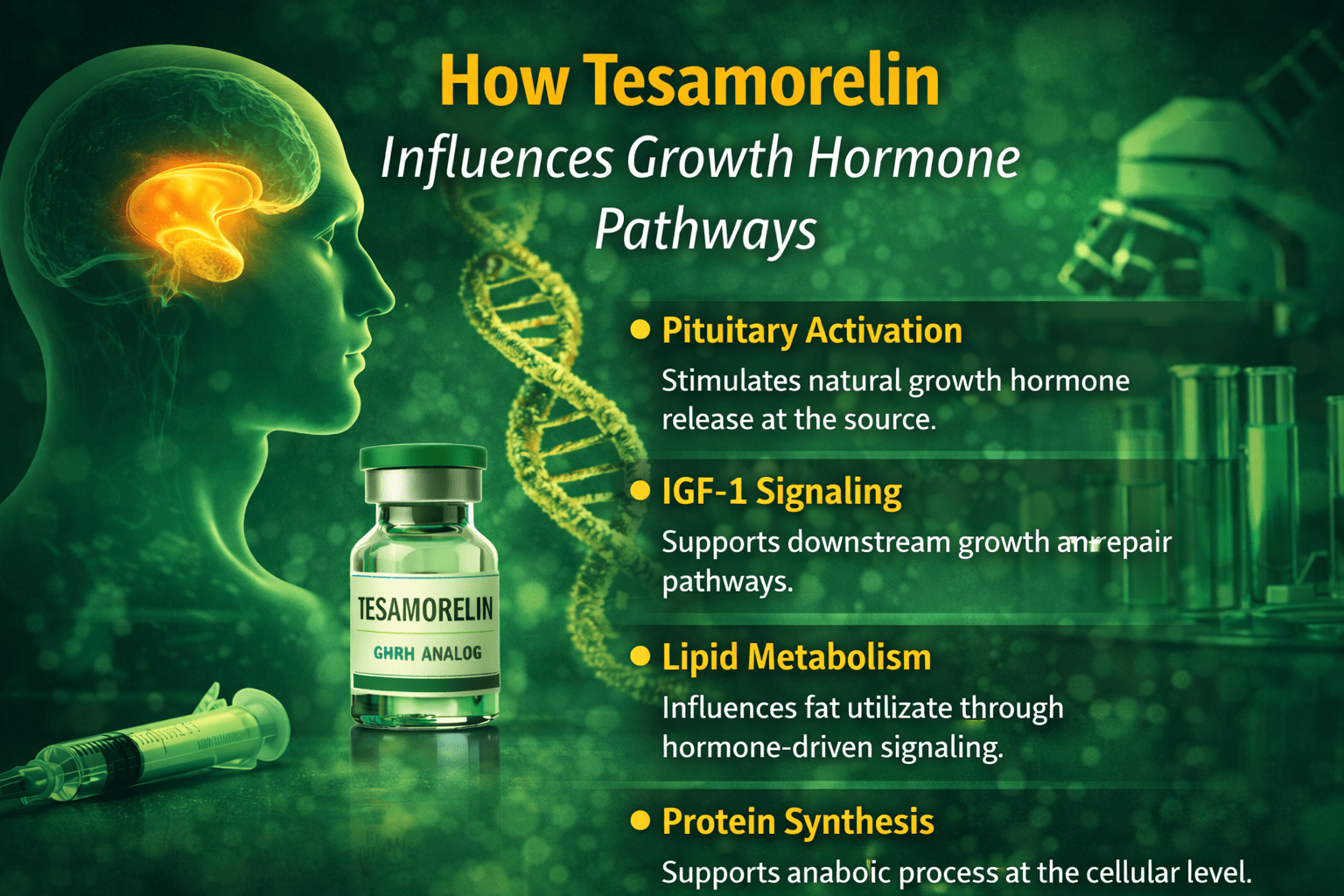
- Pituitary Activation: Stimulates natural growth hormone release at the source.
- IGF-1 Signaling: Supports downstream growth and repair pathways.
- Lipid Metabolism: Influences fat utilization through hormone-driven signaling.
- Protein Synthesis: Supports anabolic processes at the cellular level.
Tesamorelin and IGF-1 Regulation
One of the most important downstream effects of growth hormone signaling is IGF-1 production in the liver. IGF-1 plays a central role in tissue growth, cellular repair, and metabolic efficiency. Researchers often study Tesamorelin to understand how controlled growth hormone stimulation impacts IGF-1 levels over time.
Unlike direct hormone administration, Tesamorelin-driven signaling allows IGF-1 levels to rise in a more balanced and predictable manner, which is critical for long-term research models.
Why Pathway-Based Stimulation Matters
Studying growth hormone pathways rather than isolated hormone levels provides a more complete picture of endocrine health. Tesamorelin enables researchers to examine how growth hormone interacts with multiple systems simultaneously, including metabolism, recovery, and cellular turnover.
This pathway-based approach is especially valuable in aging, metabolic, and regenerative research, where hormone balance and signaling efficiency are more important than short-term hormone elevation.
Who Benefits From Studying Tesamorelin Pathways
- Researchers focused on endocrine signaling and regulation
- Scientists studying metabolic and fat-utilization pathways
- Investigators exploring aging and hormone decline models
- Laboratories examining IGF-1–mediated cellular repair
Why Tesamorelin Remains Central to Growth Hormone Research
Tesamorelin’s ability to influence growth hormone pathways at the source makes it a cornerstone peptide in endocrine research. Its targeted action, predictable signaling, and preservation of natural feedback loops provide researchers with high-quality, reproducible insights.
As interest in peptide-based hormone optimization grows, Tesamorelin continues to serve as a key tool for understanding how growth hormone pathways function in balanced, physiological conditions.