Learn GLP-3 R lab safety protocols and handling best practices for research-only peptides in controlled environments.
In laboratory environments, safety and compliance are critical when handling research peptides like GLP-3 R. These compounds are designed for controlled experimental use, requiring precise protocols for preparation, storage, and disposal. Understanding and following proper lab safety measures not only protects personnel and facilities but also ensures the integrity and reproducibility of research data.
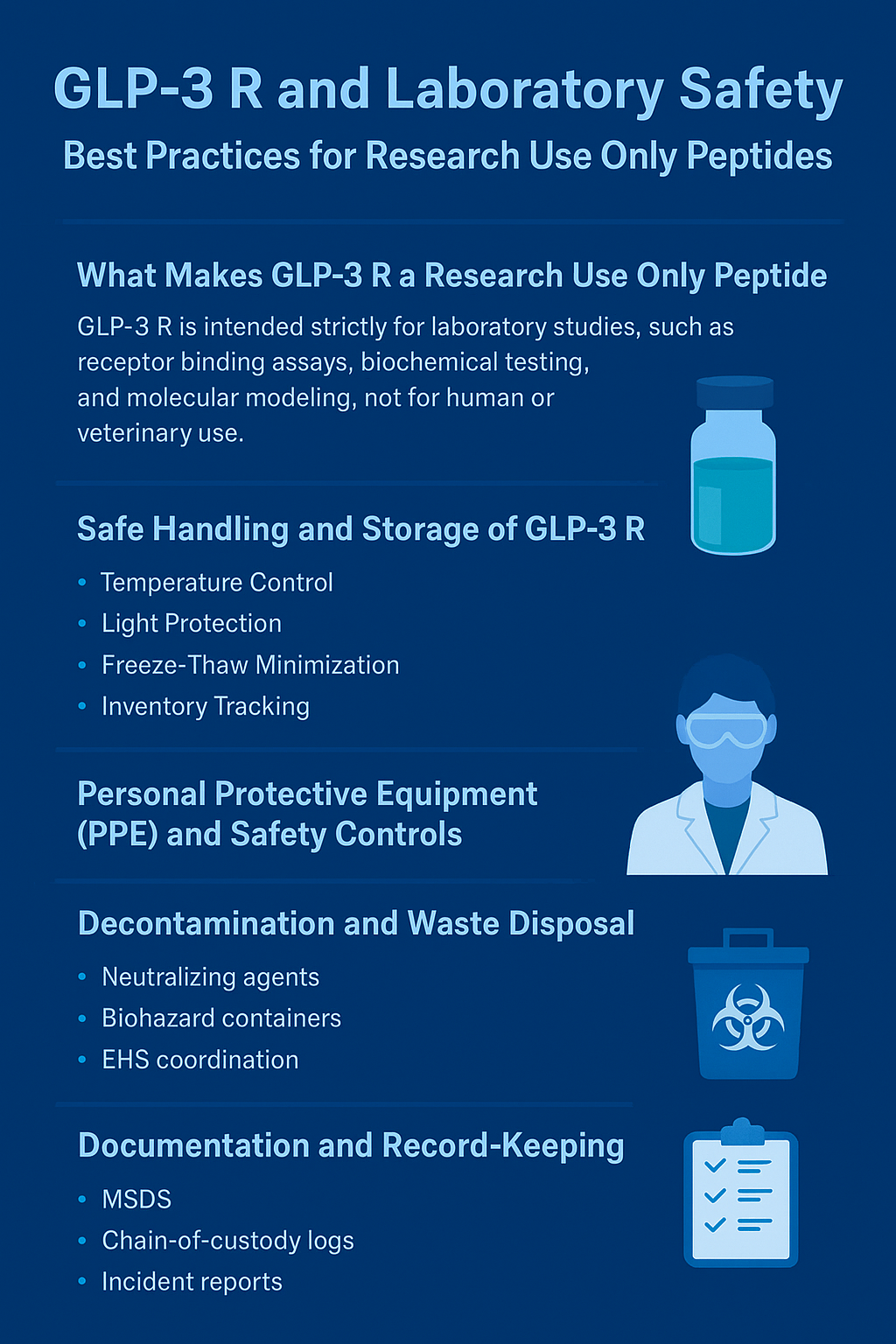
What Makes GLP-3 R a Research Use Only Peptide
GLP-3 R is classified as a Research Use Only (RUO) peptide. This means it is intended strictly for laboratory studies—such as receptor binding assays, biochemical testing, and molecular modeling—not for human or veterinary use. Researchers must treat GLP-3 R as a regulated material, adhering to institutional, local, and federal guidelines for laboratory reagents.
Safe Handling and Storage of GLP-3 R
Proper handling begins with preparation. Always work with GLP-3 R in designated research areas equipped with biosafety tools like gloves, lab coats, and eye protection. Peptide reconstitution should occur in a clean laminar flow hood using sterile materials to avoid contamination. Once prepared, aliquots should be labeled with concentration, solvent, date, and batch number.
- Temperature Control: Store GLP-3 R in a dedicated -20°C or -80°C freezer to maintain molecular stability.
- Light Protection: Use amber vials or foil wrapping to protect from UV degradation.
- Freeze–Thaw Minimization: Divide stock solutions into aliquots to prevent degradation through repeated thawing.
- Inventory Tracking: Maintain digital or written logs for batch numbers, experiment use, and expiration dates.
Personal Protective Equipment (PPE) and Safety Controls
Research personnel handling GLP-3 R should use standard laboratory PPE at all times. This includes nitrile gloves, lab coats, protective eyewear, and in some cases, respiratory protection when working with powder forms. Biosafety cabinets or chemical fume hoods should be used to limit aerosol exposure. All procedures should align with institutional biosafety level (BSL) requirements for peptide work.
Decontamination and Waste Disposal
Disposal of unused GLP-3 R or contaminated materials must comply with chemical waste management protocols. Common practices include:
- Rinsing glassware with neutralizing agents before cleaning or autoclaving.
- Disposing of contaminated gloves, pipette tips, and vials in biohazard containers.
- Labeling all waste clearly with “Research Peptide Waste – Non-Human Use.”
- Coordinating with institutional Environmental Health & Safety (EHS) officers for peptide disposal or incineration.
Documentation and Record-Keeping
Accurate documentation supports research reproducibility and safety compliance. Laboratories should maintain:
- Material Safety Data Sheets (MSDS) for all peptides and solvents used.
- Detailed records of peptide synthesis, reconstitution, and experimental use.
- Chain-of-custody logs for each GLP-3 R batch.
- Incident reports for any spills, exposure events, or deviations from protocol.
Training and Compliance
Personnel working with GLP-3 R must complete training in chemical safety, peptide handling, and emergency procedures. Supervisors are responsible for ensuring that all researchers understand the potential risks and the importance of following proper protocols. Annual safety refreshers and documented competency checks help maintain compliance with institutional and federal standards.
Emergency Procedures
In case of accidental exposure or spill:
- Skin Contact: Immediately wash the affected area with soap and water.
- Eye Contact: Flush with water for at least 15 minutes and report the incident.
- Spill Response: Use designated spill kits and follow peptide-specific cleanup procedures.
- Reporting: Notify laboratory management and EHS for incident documentation.
Conclusion
GLP-3 R research contributes valuable insights to peptide science—but only when handled under the highest safety and compliance standards. Following best practices for PPE, storage, documentation, and disposal ensures both the validity of experimental results and the well-being of laboratory personnel.
For laboratory research use only. Not for human consumption or clinical application.