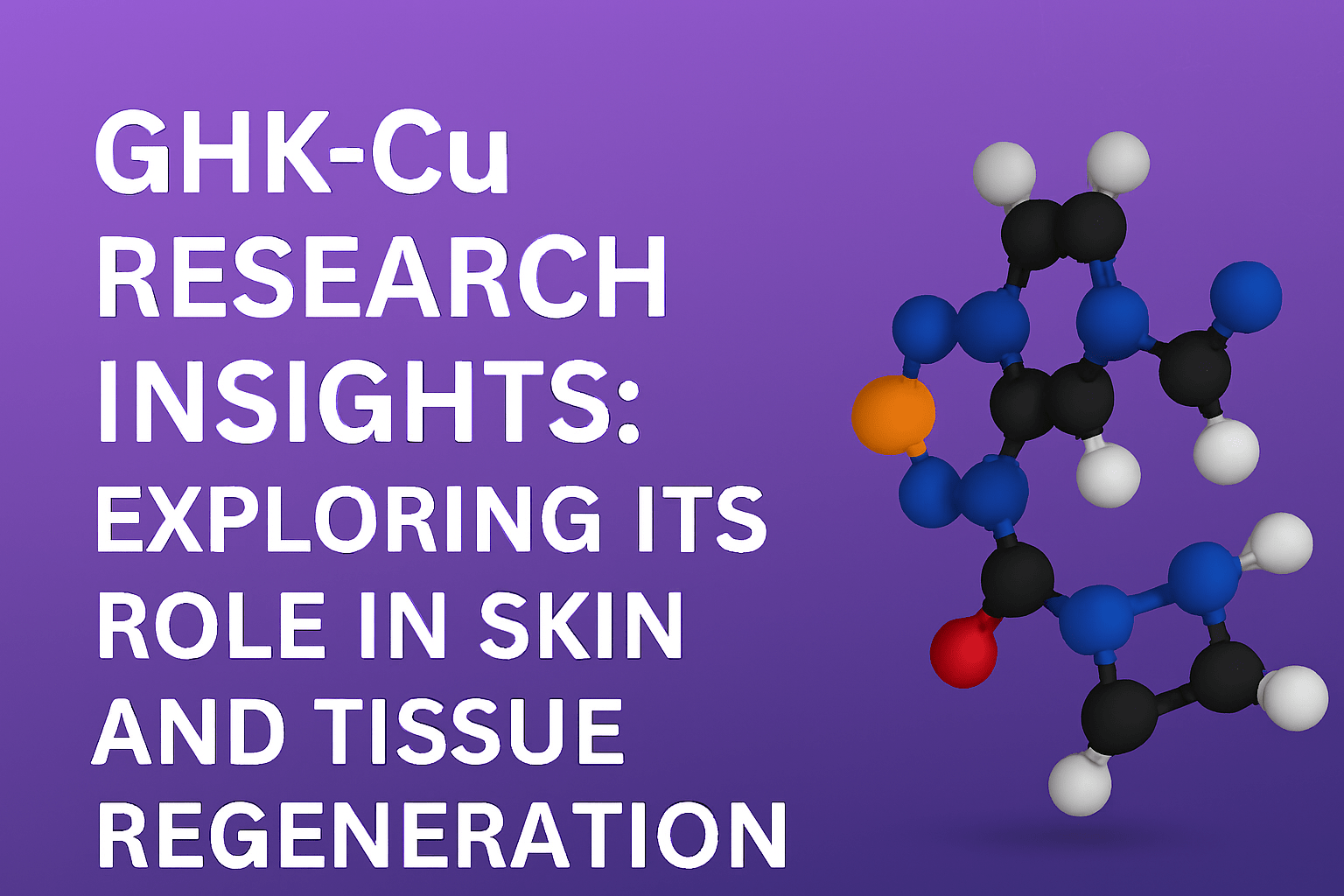
GHK-Cu is a naturally occurring copper-binding peptide that has become a subject of interest in scientific research due to its potential effects on tissue repair and skin regeneration. Laboratory studies have examined how it may influence cellular pathways, collagen production, and wound healing in preclinical models, providing insights for researchers exploring tissue recovery mechanisms.
Understanding GHK-Cu in Laboratory Research
In preclinical studies, GHK-Cu has been shown to interact with cells involved in tissue repair, including fibroblasts and keratinocytes. Researchers are exploring its potential to modulate gene expression related to collagen synthesis, extracellular matrix remodeling, and anti-inflammatory pathways. These studies focus on controlled experimental conditions, providing foundational insights without making clinical claims for human use.
Key Findings from Preclinical Studies
- Collagen Production: Laboratory models suggest GHK-Cu may stimulate collagen synthesis, supporting skin structure and connective tissue health.
- Wound Healing: Studies indicate that GHK-Cu can accelerate wound closure in animal models, providing a research framework for understanding tissue repair processes.
- Anti-Inflammatory Effects: Experimental evidence suggests modulation of inflammatory pathways, which may help tissues recover more efficiently in laboratory conditions.
- Angiogenesis: Preclinical research shows that GHK-Cu may enhance blood vessel formation, supporting nutrient delivery and tissue regeneration in controlled studies.
Mechanisms Explored in Laboratory Studies
Scientific investigations focus on how GHK-Cu influences cellular signaling and repair pathways. Researchers study its effects on gene expression related to extracellular matrix proteins, growth factors, and enzymes that regulate tissue remodeling. Preclinical models allow scientists to isolate these effects and understand their potential relevance in tissue regeneration research.
Applications in Preclinical Models
Most GHK-Cu studies are conducted in animal or cell culture models. These experiments simulate skin injury or connective tissue damage to explore mechanisms of repair, cellular signaling, and tissue remodeling. Laboratory findings provide valuable data for understanding how peptides like GHK-Cu may influence recovery at the cellular level.
Considerations for Scientific Research
- Preclinical Evidence: Research is primarily conducted in laboratory or animal models, not human clinical trials.
- Mechanistic Insights: Studies focus on cellular pathways, collagen synthesis, and tissue repair mechanisms.
- Controlled Experiments: Findings are derived from structured laboratory conditions rather than clinical applications.
- Future Research: Data help guide hypotheses for further exploration of tissue regeneration and peptide biology.
Why GHK-Cu Remains a Research Focus
GHK-Cu continues to attract attention in scientific research because of its reported effects on tissue repair, collagen production, and cellular signaling pathways. Preclinical studies provide a model for exploring how peptides influence fundamental biological processes involved in healing and regeneration.
- Experimental Insights: Offers a research framework for studying tissue regeneration and repair mechanisms.
- Scientific Transparency: Research is conducted under controlled laboratory conditions without human clinical claims.
- Guiding Future Studies: Preclinical findings provide data to support additional research on connective tissue and skin repair.
Research Limitations
Current GHK-Cu research is preclinical, and human applications have not been validated. All studies are intended for educational and scientific purposes, and the peptide is primarily used as a research tool for understanding tissue repair mechanisms.
How Researchers Conduct Experiments
In laboratory studies, GHK-Cu is applied under controlled conditions to examine effects on cell growth, tissue repair, and gene expression. Protocols prioritize reproducibility, accuracy, and scientific rigor to ensure that results provide meaningful insights into the peptide’s potential mechanisms.
“GHK-Cu provides a valuable preclinical model to study tissue repair, collagen synthesis, and cellular regeneration in controlled laboratory settings.”
– Peer-Reviewed Research Summary
Conclusion: GHK-Cu as a Research Peptide
Ongoing preclinical research continues to explore GHK-Cu’s potential effects on tissue repair and skin regeneration. Laboratory findings offer insights into cellular mechanisms, collagen production, angiogenesis, and wound healing pathways, strictly within the context of scientific investigation.