CJC-1295 (No DAC) and Ipamorelin are widely used in laboratory research to study growth hormone–related signaling pathways. For reliable results, understanding the stability, half-life, and handling requirements of these peptides is critical. Proper management ensures reproducible, high-quality data in controlled in vitro experiments.
Stability Considerations for Research Peptides
Both CJC-1295 (No DAC) and Ipamorelin are supplied as lyophilized powders to preserve integrity during storage and transport. Stability is influenced by factors such as temperature, humidity, and exposure to light. Proper storage conditions are essential to prevent degradation and maintain peptide activity for laboratory use.
Best Practices for Maintaining Stability
- Cool, Dry Storage: Keep lyophilized peptides in a controlled environment prior to reconstitution.
- Minimal Light Exposure: Store in opaque containers or away from direct light.
- Short-Term Use Post-Reconstitution: Reconstituted peptides should be used promptly and stored under recommended conditions.
- Consistent Handling: Avoid repeated freeze-thaw cycles to prevent loss of peptide activity.
Understanding Half-Life in Laboratory Experiments
The half-life of a peptide influences experimental design and interpretation. CJC-1295 (No DAC) has a shorter half-life than the DAC variant, making it ideal for time-sensitive assays or repeated dosing studies. Ipamorelin also has a relatively short half-life, supporting transient receptor activation and precise temporal control in vitro.
Why Half-Life Matters in Research
- Enables repeated-measure experiments without prolonged receptor activation
- Supports studies examining transient signaling events
- Facilitates accurate comparison between single-peptide and combination protocols
- Reduces variability caused by extended peptide activity in controlled assays
Laboratory Handling Guidelines
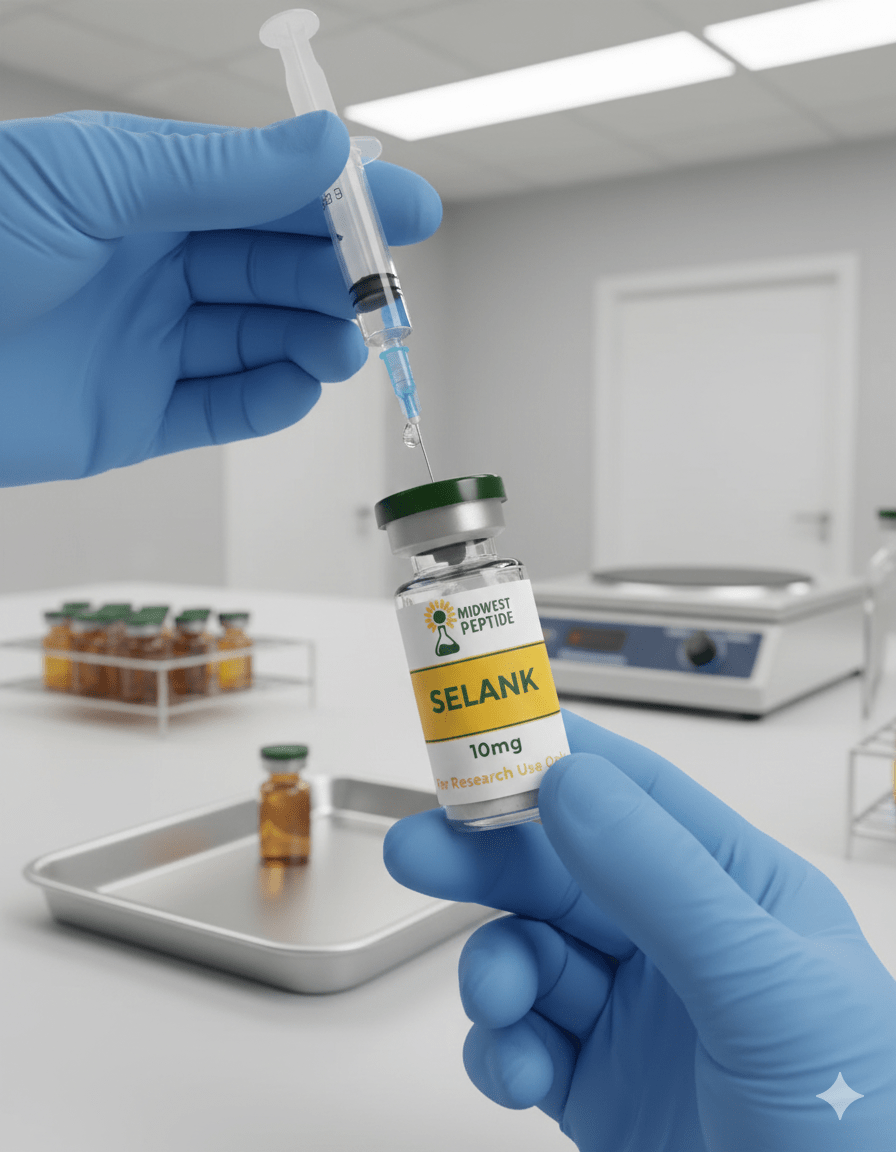
Proper handling of peptides is essential for experimental reliability. Both CJC-1295 (No DAC) and Ipamorelin should be reconstituted using sterile techniques and stored according to lab best practices. Consistent documentation ensures reproducibility and allows accurate interpretation of results.
- Sterile Reconstitution: Use clean, sterile equipment to minimize contamination.
- Accurate Dosing: Measure peptide amounts precisely to maintain experimental consistency.
- Environmental Monitoring: Keep track of temperature and humidity during storage and active use.
- Record-Keeping: Document preparation and handling variables for each experiment.
Who Benefits from Understanding Stability and Handling
- Laboratories focused on growth hormone signaling pathways
- Researchers performing time-sensitive receptor studies
- Scientific teams analyzing peptide synergy and interaction
- Institutions prioritizing reproducibility in in vitro assays
Advantages of Proper Peptide Management
Following recommended stability, half-life, and handling protocols ensures that experimental results are reliable and reproducible. Proper management reduces variability, maintains peptide activity, and supports accurate interpretation of growth hormone–related signaling in vitro.
Research-Only Compliance Standards
CJC-1295 (No DAC) and Ipamorelin are intended strictly for laboratory research. They are not approved for human or veterinary use and are not designed for clinical, therapeutic, or diagnostic applications. Researchers should follow all laboratory safety guidelines and applicable regulatory requirements.
“Consistent handling, proper storage, and understanding peptide half-life are critical for achieving reproducible, high-quality results in laboratory studies.”
Advancing Laboratory Research Through Best Practices
By following stability and handling best practices, researchers can maximize the reliability of CJC-1295 (No DAC) and Ipamorelin studies. This ensures high-quality, reproducible data and deeper insights into growth hormone–related pathways in controlled in vitro experiments.
For research teams investigating growth hormone signaling, proper peptide management provides a structured, reliable framework for safe, accurate, and compliant laboratory studies.