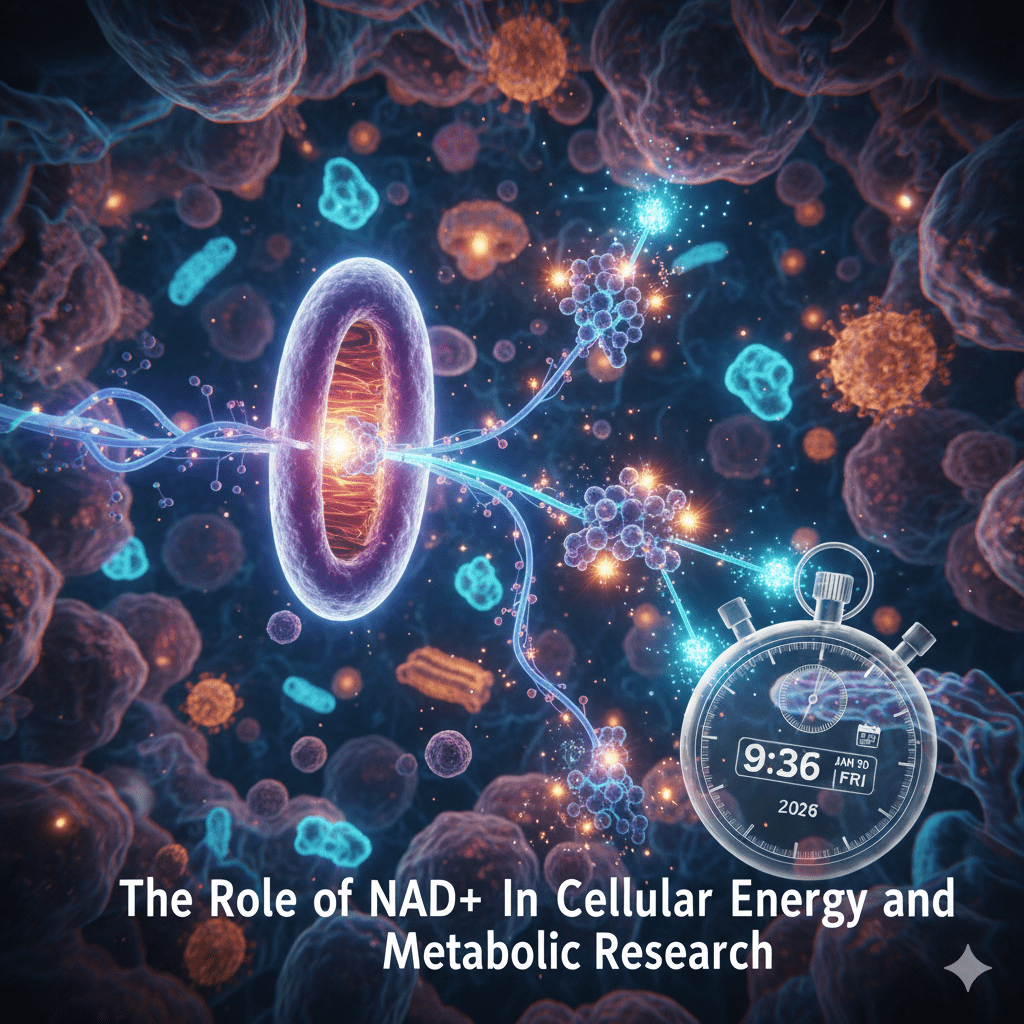
Nicotinamide adenine dinucleotide (NAD+) is a core molecule examined in cellular energy and metabolic research. Its ability to transfer electrons makes it essential for biochemical reactions that support cellular metabolism. Because of its involvement in multiple energy-producing pathways, NAD+ remains a central focus in laboratory-based metabolic studies.
Understanding NAD+ and Cellular Energy
NAD+ functions as a coenzyme in redox reactions that drive cellular energy production. By cycling between its oxidized (NAD+) and reduced (NADH) forms, it enables enzymatic processes responsible for converting nutrients into usable cellular energy. Researchers analyze NAD+ activity to better understand metabolic efficiency at the cellular level.
Key Functions in Energy Metabolism
- Electron Transfer: Facilitates oxidation-reduction reactions.
- ATP Support: Enables pathways that lead to ATP synthesis.
- Metabolic Regulation: Influences cellular energy balance.
- Research Versatility: Applicable to multiple metabolic models.
NAD+ in Major Metabolic Pathways
NAD+ plays a critical role in glycolysis, the citric acid cycle, and oxidative phosphorylation. In these pathways, NAD+ acts as an electron acceptor, allowing metabolic reactions to proceed efficiently. Laboratory research often examines how NAD+ availability impacts these pathways and overall metabolic output.
Metabolic Processes Commonly Studied
- Glucose metabolism and energy conversion
- Mitochondrial respiration efficiency
- Redox balance and oxidative stress models
- Cellular adaptation to metabolic demand
Mitochondrial Function and NAD+ Research
The mitochondria rely heavily on NAD+ to support energy production. Researchers study NAD+ to evaluate mitochondrial performance and electron transport efficiency. Changes in NAD+ levels can influence how mitochondria respond to metabolic stress, making it a valuable research molecule in energy-focused studies.
Why NAD+ Matters in Mitochondrial Studies
- Supports electron transport chain activity
- Contributes to cellular respiration modeling
- Helps analyze metabolic efficiency in vitro
- Provides insight into mitochondrial dynamics
Experimental Use in Metabolic Research
NAD+ is frequently used in controlled laboratory environments to support studies on cellular metabolism. Its predictable biochemical behavior allows researchers to design reproducible experiments focused on energy production and metabolic regulation.
- Preparation: Use laboratory-grade sterile techniques.
- Storage: Maintain stability by storing under recommended conditions.
- Controlled Variables: Monitor temperature, light, and exposure time.
- Documentation: Record experimental parameters for consistency.
Who Uses NAD+ in Metabolic Studies
- Biochemical research laboratories
- Metabolism-focused research teams
- Cellular energy and respiration researchers
- Academic and institutional research facilities
Why NAD+ Is Essential to Metabolic Research
NAD+ remains essential in metabolic research due to its involvement in nearly every major energy-producing pathway. Its role in redox balance and mitochondrial function allows researchers to explore how cells generate and regulate energy under varying conditions.
Research-Only Disclaimer
NAD+ is intended for laboratory research and in vitro use only. It is not approved for human or veterinary use and should not be used for therapeutic, diagnostic, or clinical applications. All handling and experimentation must follow applicable laboratory safety and regulatory guidelines.
“NAD+ is fundamental to cellular energy research, serving as a cornerstone molecule in metabolic pathway analysis.”
Supporting Energy Research with NAD+
Through controlled laboratory study, NAD+ enables deeper understanding of how cells produce, regulate, and adapt energy usage. Its central role in metabolism makes it an indispensable tool for in vitro research focused on cellular energy systems.
For laboratories investigating metabolic pathways and mitochondrial function, NAD+ provides a reliable foundation for structured and reproducible research.