Research into growth hormone secretagogues has gained significant attention in laboratory settings, particularly using the CJC-1295 (No DAC) and Ipamorelin peptide combination. These compounds allow scientists to explore how different pathways stimulate growth hormone release and how their interactions influence downstream signaling under controlled in vitro conditions.
What Are Growth Hormone Secretagogues?
Growth hormone secretagogues (GHS) are compounds that stimulate the secretion of growth hormone from the pituitary gland. In laboratory research, CJC-1295 (No DAC) and Ipamorelin are frequently used to study these pathways, as they operate via distinct but complementary mechanisms. CJC-1295 (No DAC) mimics growth hormone–releasing hormone (GHRH), while Ipamorelin selectively binds to growth hormone secretagogue receptors (GHS-R).
Why These Peptides Are Studied Together
- Complementary Mechanisms: Both peptides activate growth hormone pathways through independent routes.
- Pathway Analysis: Combined use allows researchers to observe interaction effects on receptor signaling.
- Short and Controlled Action: The No DAC structure supports precise timing for experimental protocols.
- Research Versatility: Enables multiple assay types, including receptor binding and secretion modeling.
Mechanistic Insights in Laboratory Studies
CJC-1295 (No DAC) stimulates pulsatile growth hormone release by activating GHRH receptors, while Ipamorelin targets GHS-R. Studying the peptides together allows researchers to understand how simultaneous activation affects overall signaling, receptor sensitivity, and hormone release kinetics. This combination provides valuable insight into pathway coordination in a controlled environment.
Common Applications in Research
- Modeling growth hormone secretion in vitro
- Analyzing receptor interactions and cooperative signaling
- Comparing single-peptide versus combined-peptide responses
- Evaluating temporal dynamics of peptide-induced signaling
The Role of CJC-1295 No DAC in Studies
The No DAC variant has a shorter half-life, which is advantageous for research that requires precise timing. This allows investigators to conduct repeated-measure experiments and monitor transient signaling effects without prolonged receptor stimulation, making data more accurate and reproducible.
How Ipamorelin Enhances Research Outcomes
Ipamorelin is highly selective for GHS-R, minimizing off-target interactions. Its focused receptor activity enables researchers to isolate and examine the effects of specific receptor pathways, making it ideal for combination studies where clarity and control are critical.
Handling and Storage Guidelines
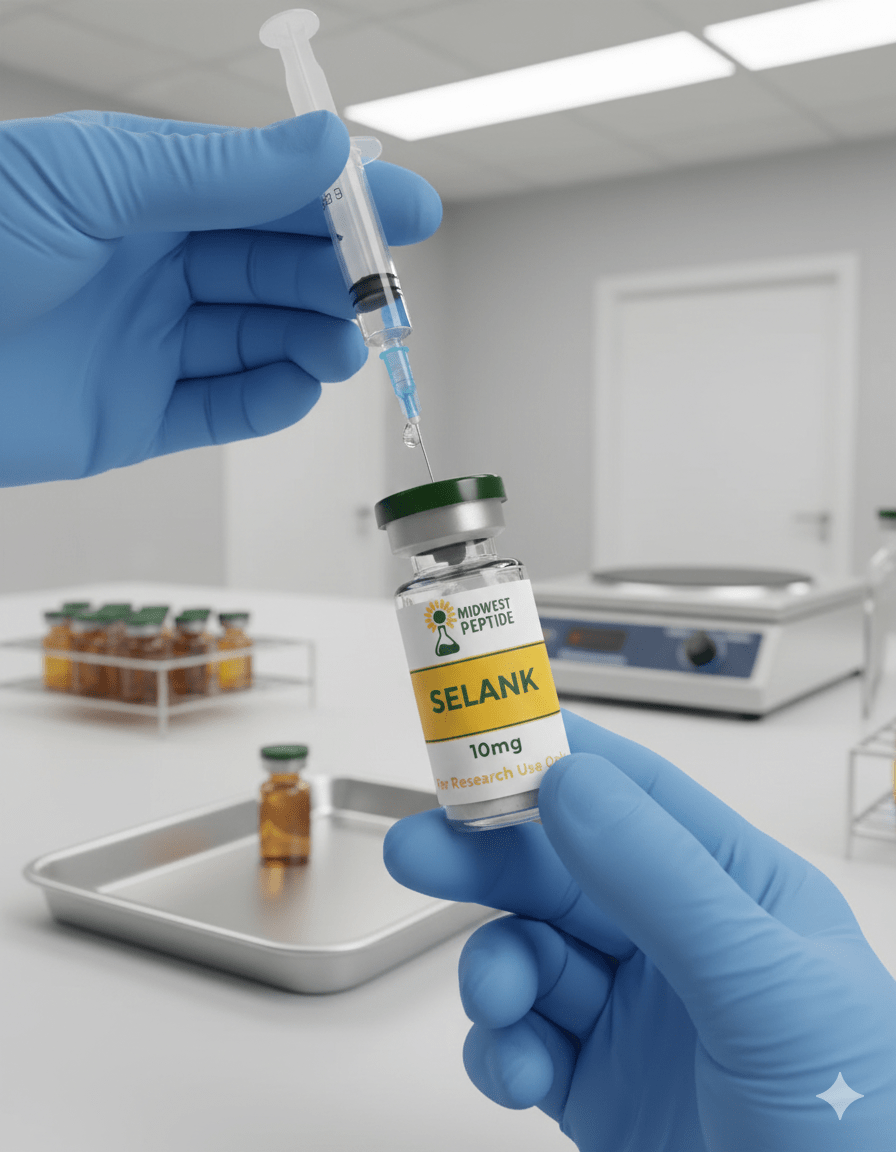
Proper handling is essential to maintain peptide integrity for reliable results. Both peptides are typically supplied as lyophilized powders, and researchers should follow laboratory protocols for storage, reconstitution, and record-keeping to ensure experimental consistency.
- Temperature Control: Store in a cool, dry environment before use.
- Sterile Reconstitution: Follow lab-standard sterile procedures.
- Documentation: Record all preparation details for reproducibility.
- Environmental Monitoring: Monitor stability during active research.
Who Uses Growth Hormone Secretagogue Research Peptides
- Laboratories studying GH signaling pathways
- Researchers analyzing receptor dynamics
- Institutions conducting peptide combination studies
- Scientific teams performing time-sensitive in vitro assays
Benefits of Using CJC/Ipamorelin in Combination
Combining CJC-1295 (No DAC) and Ipamorelin allows researchers to study multiple aspects of growth hormone secretion at once. This approach enhances understanding of pathway coordination, receptor interactions, and potential synergistic effects that would be difficult to observe using individual peptides alone.
Research-Only Compliance Standards
These peptides are intended solely for in vitro research. They are not approved for human or veterinary use and are not designed for clinical, therapeutic, or diagnostic applications. All research should follow institutional and regulatory safety guidelines.
“Combining growth hormone secretagogues provides a more complete view of signaling dynamics. Controlled research ensures precise, reproducible outcomes.”
Advancing Laboratory Peptide Research
Using CJC-1295 (No DAC) and Ipamorelin together allows researchers to explore the complex mechanisms of growth hormone signaling with clarity and control. This research-focused approach supports reproducible, high-quality studies and offers meaningful insight into peptide interactions within laboratory environments.
For research teams examining GH-related pathways, this peptide combination provides a reliable, compliant option to conduct precise, controlled in vitro studies.