CJC-1295 (No DAC) combined with Ipamorelin has become a widely studied peptide blend in laboratory environments focused on growth hormone–related signaling pathways. Used strictly for research purposes, this combination allows investigators to examine how distinct peptide mechanisms interact when introduced together under controlled experimental conditions.
Why Researchers Study CJC-1295 (No DAC) and Ipamorelin Together
CJC-1295 (No DAC) and Ipamorelin operate through different but complementary biological pathways. CJC-1295 (No DAC) is a growth hormone–releasing hormone (GHRH) analog, while Ipamorelin is classified as a growth hormone secretagogue receptor (GHS-R) agonist. When studied together, researchers can observe how simultaneous pathway activation influences signaling patterns in vitro.
Key Research Characteristics of the Blend
- Dual Pathway Activation: Targets both GHRH and GHS-R mechanisms independently.
- No DAC Structure: Shorter active duration allows precise timing analysis.
- Controlled Research Use: Suitable for laboratory-based observation and data collection.
- Synergistic Interest: Enables comparison of combined versus isolated peptide activity.
Understanding CJC-1295 (No DAC) in Research Settings
CJC-1295 (No DAC) differs from its DAC-containing counterpart by excluding the drug affinity complex, resulting in a shorter half-life. This structural difference makes it especially useful for researchers who require tighter control over exposure windows during experimentation. Its activity allows investigators to analyze pulsatile signaling behavior without prolonged systemic presence.
Ipamorelin and Its Role in Laboratory Research
Ipamorelin is recognized in research literature for its selective binding to the growth hormone secretagogue receptor. Unlike earlier compounds in this category, Ipamorelin demonstrates a narrower receptor interaction profile, making it valuable for studies aiming to isolate specific signaling responses without broad receptor activation.
Why the No DAC Version Matters in Research
The absence of DAC in CJC-1295 allows researchers to observe more immediate and transient signaling effects. This makes the No DAC version particularly useful for time-sensitive assays, repeated-measure protocols, and comparative studies evaluating short-duration versus extended-release peptide activity.
Common Laboratory Applications
- Growth hormone signaling pathway analysis
- Receptor interaction and binding studies
- Peptide synergy and interaction modeling
- Controlled in vitro experimental design
Handling and Storage Considerations
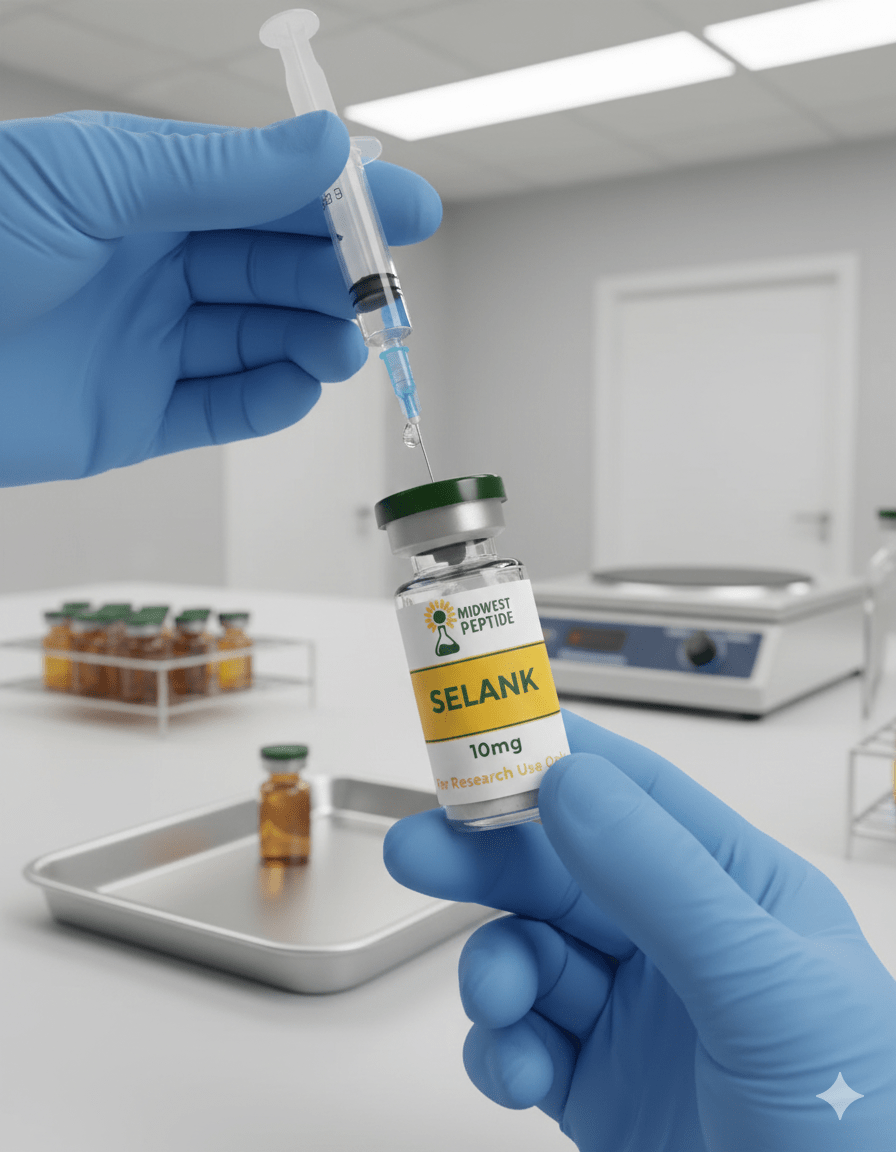
For research integrity, proper handling and storage are essential. CJC-1295 (No DAC) and Ipamorelin are typically supplied as lyophilized powders to maintain stability during transport and storage. Researchers should follow established laboratory protocols to ensure sample consistency and reliability throughout experimentation.
- Storage Conditions: Maintain in a cool, dry environment prior to reconstitution.
- Controlled Reconstitution: Use sterile techniques appropriate for laboratory research.
- Documentation: Record preparation variables for experimental accuracy.
- Temperature Monitoring: Ensure stability during active research use.
Who Typically Researches This Peptide Blend
- Laboratories studying growth hormone–related signaling pathways
- Researchers analyzing peptide-receptor interactions
- Institutions conducting comparative peptide mechanism studies
- Scientific teams focused on controlled in vitro research models
Why Researchers Choose Combined Peptide Blends
Studying peptides in combination allows researchers to observe interaction effects that may not be evident when compounds are evaluated individually. The CJC-1295 (No DAC) and Ipamorelin blend provides a structured framework for analyzing how distinct signaling routes behave concurrently under controlled laboratory conditions.
Commitment to Research-Only Standards
This peptide blend is intended strictly for in vitro laboratory research. It is not designed for human or veterinary use and is not intended for diagnostic, therapeutic, or clinical applications. All research should be conducted by qualified professionals following applicable laboratory regulations and safety guidelines.
“High-quality research begins with well-characterized compounds and clear experimental intent. Precision and compliance are essential in every study.”
Explore Research Peptides with Confidence
Understanding the characteristics of CJC-1295 (No DAC) and Ipamorelin allows researchers to design more informed and controlled experiments. By selecting well-documented research compounds, laboratories can maintain consistency, accuracy, and clarity across their peptide studies.
Designed for research professionals seeking reliable peptide compounds, this blend supports structured investigation into growth hormone–related signaling pathways within compliant laboratory environments.