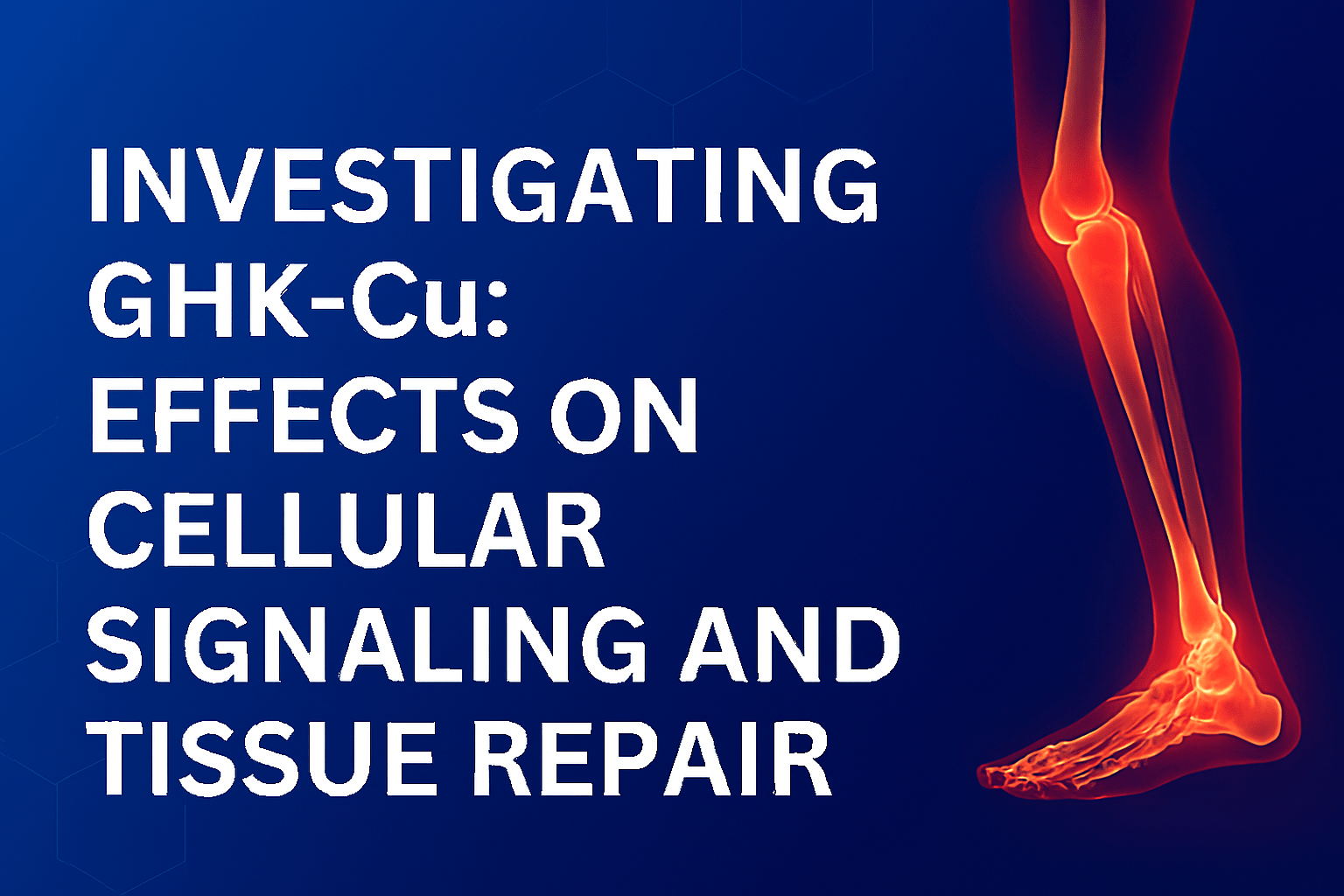
GHK-Cu, a naturally occurring copper-binding peptide, has been extensively studied in scientific research for its potential activity in cellular signaling and tissue repair. Although not approved for clinical use, GHK-Cu remains a focus of preclinical research due to its observed effects in laboratory studies involving gene expression, enzyme modulation, and tissue regeneration.
Cellular Signaling and GHK-Cu: Overview
GHK-Cu’s structure allows it to bind copper ions, which play a critical role in many cellular processes. Preclinical studies indicate that the GHK-Cu complex may influence signaling molecules involved in growth, inflammation, and tissue remodeling. These studies provide foundational insights for further investigation in the field of regenerative science.
Key Mechanisms of Action Observed in Research
- Gene Expression Modulation: GHK-Cu has been shown to activate or suppress a variety of genes tied to cellular repair and protective responses.
- Enzyme Stimulation: The peptide may help activate antioxidative and structural enzymes through copper delivery.
- Inflammatory Pathway Regulation: GHK-Cu may lower pro-inflammatory markers in lab models of tissue injury.
- Protein Synthesis Enhancement: GHK-Cu has been found to support protein building blocks essential for tissue recovery.
How GHK-Cu Affects Tissue Repair in Preclinical Studies
One of the primary research interests in GHK-Cu is its potential role in tissue regeneration. In various controlled experiments, the peptide has been associated with structural and functional improvements in damaged tissues.
Observed Tissue Repair Activities
- Increased Collagen Production: GHK-Cu has been shown to upregulate genes associated with collagen types I and III.
- Repair of Connective Tissue: Studies document improved connective tissue strength and organization in lab models.
- Wound Model Results: Treated tissues have demonstrated faster closure rates and increased tensile strength during healing.
- Angiogenesis Stimulation: New blood vessel formation is observed in tissue systems using GHK-Cu.
Laboratory Applications for GHK-Cu
GHK-Cu is widely used in preclinical environments to model various aspects of biological regeneration and cellular activity. These include:
- In Vitro Cell Biology: Researchers study fibroblasts, keratinocytes, and neuronal cells to examine how GHK-Cu affects growth and function.
- In Vivo Healing Models: Animal studies provide observable data on wound size reduction, collagen deposition, and tissue resilience.
- Biochemical Benchwork: Used to investigate oxidative stress pathways, enzyme kinetics, and metal ion transport processes.
Cellular Signaling Pathways Affected by GHK-Cu
In research settings, GHK-Cu has been noted to influence several major cellular pathways:
- TGF-β Activation: Transformation growth factor beta is important for tissue regeneration and cell differentiation.
- NF-κB Suppression: GHK-Cu has shown the ability to reduce activity in pathways tied to inflammatory responses.
- HIF-1α Stimulation: Promotes cellular adaptation to low-oxygen environments and angiogenesis.
Antioxidant Properties in Research Models
In studies focused on oxidative stress, GHK-Cu has been associated with activation of superoxide dismutase (SOD) and catalase enzymes. These antioxidant properties are believed to help protect cells from free radical-induced damage, supporting the overall repair process in tissues.
Research Data on GHK-Cu and Cell Proliferation
- Skin Cells: Enhanced proliferation of fibroblasts and keratinocytes.
- Neuroglia: Observed support of neurons and glial cell regeneration in rodent models.
- Endothelial Cells: Evidence suggests improved endothelial behavior conducive to new blood vessel formation.
Limitations and Legal Status
GHK-Cu is not approved for therapeutic use by the FDA or other regulating bodies. Current findings derive exclusively from laboratory settings and are not indicative of any human outcomes or medical applications. The peptide is sold solely for in vitro or preclinical research purposes.
Conclusion: A Promising Peptide in Regenerative Science Research
GHK-Cu continues to be an important tool for scientists studying cellular signaling, oxidative balance, and tissue repair in controlled environments. While it is still early in the research lifecycle, GHK-Cu offers compelling pathways for deeper investigation into the mechanisms of regeneration at the cellular and structural levels.
“GHK-Cu’s ability to influence gene expression and cellular recovery mechanisms positions it as a valuable model compound in tissue repair research.”
– Preclinical Research Review