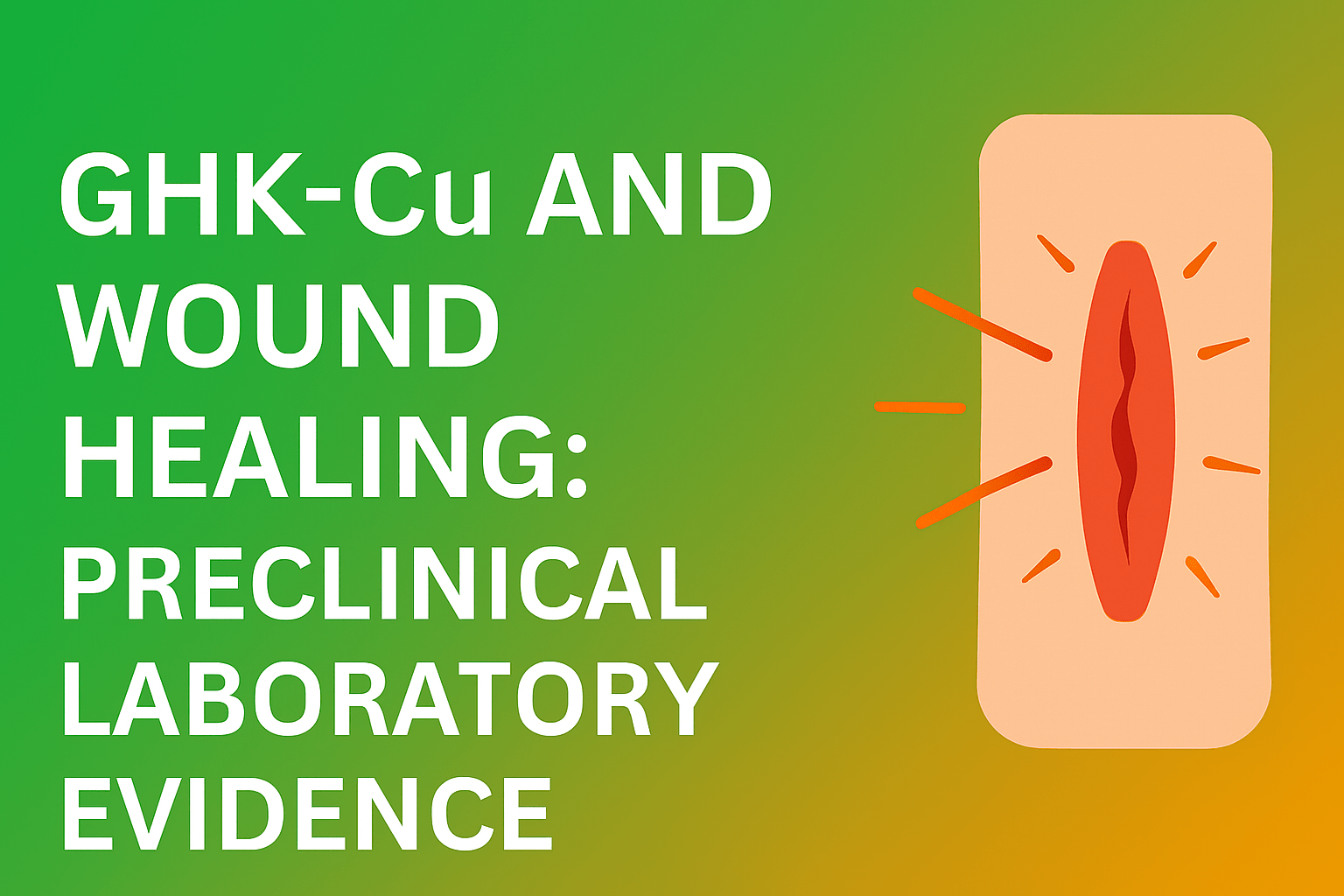
GHK-Cu, a copper-binding peptide complex, has been studied extensively in laboratory settings for its potential effects on skin and tissue recovery. Preclinical research has examined its role in wound healing models, focusing on how the peptide may influence cellular behaviors, inflammation, and structural regeneration after injury. These findings contribute to a growing body of knowledge about the biological activity of GHK-Cu in controlled environments—though no clinical outcomes are claimed.
How GHK-Cu Works in Wound Healing Models
Wound healing is a complex process involving stages such as inflammation, tissue formation, collagen restructuring, and remodeling. Researchers observe GHK-Cu’s ability to interact with various cellular and molecular components during these stages in preclinical study settings.
Observed Benefits in Lab Models
- Enhanced Cellular Migration: GHK-Cu has been shown to increase migration of keratinocytes and fibroblasts involved in tissue closure.
- Reduced Inflammation: Lab studies document reduced inflammatory markers in wounds treated with GHK-Cu.
- Angiogenesis Support: Preclinical data suggest the peptide may promote new blood vessel formation in injured tissues.
- Collagen Remodeling: Collagen and elastin fibers have been seen to rebuild faster in GHK-Cu treated models compared to controls.
Peptide-Copper Complex in Action: Preclinical Study Highlights
In several wound healing studies, including in vitro and in vivo models, GHK-Cu has been noted for its contributions to:
- Fibroblast Proliferation: Fibroblasts, critical for collagen and extracellular matrix production, respond favorably to GHK-Cu in cell cultures.
- Antioxidative Pathways: GHK-Cu may help balance oxidative stress levels in damaged tissues by increasing cellular defense mechanisms.
- Scar Tissue Regulation: Research suggests the peptide may support more organized collagen formation in scar healing models.
Wound Healing Study Designs
The majority of studies on GHK-Cu and wound healing are conducted within controlled lab environments, with experiments typically falling under these categories:
- Cell Culture Models: These studies analyze how GHK-Cu affects specific cell types directly related to wound response.
- Animal Studies: Observations include accelerated re-epithelialization, decreased wound diameter, and improved tensile strength in treated subjects.
- Biochemical Assays: Tests measure factors such as collagen levels, antioxidant enzyme activity, and gene expression patterns.
Key Biological Mechanisms Observed
1. Copper Delivery
As a copper chelating agent, GHK-Cu helps transport copper to specific biological sites. Copper is a required cofactor for several enzymes, including lysyl oxidase, which supports collagen crosslinking and structural stability during tissue regeneration.
2. Anti-Inflammatory Action
GHK-Cu has demonstrated the ability to modulate levels of pro-inflammatory cytokines. By reducing excessive inflammation, the peptide may enable faster transition from the inflammation stage to tissue repair.
3. Triggering Growth Factors
Some studies propose that GHK-Cu may activate wound-healing related growth factors such as VEGF (Vascular Endothelial Growth Factor), which promotes angiogenesis and nutrient supply to regenerating tissues.
4. Free Radical Reduction
Through observed effects on superoxide dismutase (SOD) activity, GHK-Cu may reduce oxidative damage in lab studies of injured skin or tissue.
Findings from Animal Studies
Rodent models have provided insight into GHK-Cu’s potential actions in wound healing. Key findings include:
- Faster re-epithelialization of superficial wounds.
- Reduction in wound size and closure time.
- Improved blood flow to wound areas.
- More organized collagen deposition in regenerated skin.
While promising, these findings are strictly preliminary and based on non-human research models. No claims of human wound healing results are made.
Implications for Laboratory Research
GHK-Cu serves as a key model for studying tissue recovery, protein synthesis, and enzyme activation in controlled laboratory settings. It is widely used in research as an investigative tool—not as a therapeutic product.
Regulatory Status and Limitations
GHK-Cu is not approved for medical or cosmetic use by any regulatory authority. All data described above relate solely to laboratory testing environments and preclinical research. This peptide complex is sold strictly for in vitro or animal-based investigative study.
Conclusion: A Research Agent for Wound Biology
From stimulating fibroblast activity to promoting angiogenesis and regulating collagen synthesis, GHK-Cu offers valuable insights into the wound healing process in preclinical studies. Continued laboratory research may unlock a deeper understanding of how copper peptides interact with biological tissues, though widespread clinical applications have not been established at this time.
“In science, GHK-Cu continues to serve as a promising model for unraveling the biological complexities of tissue repair.”
– Lab Research Summary