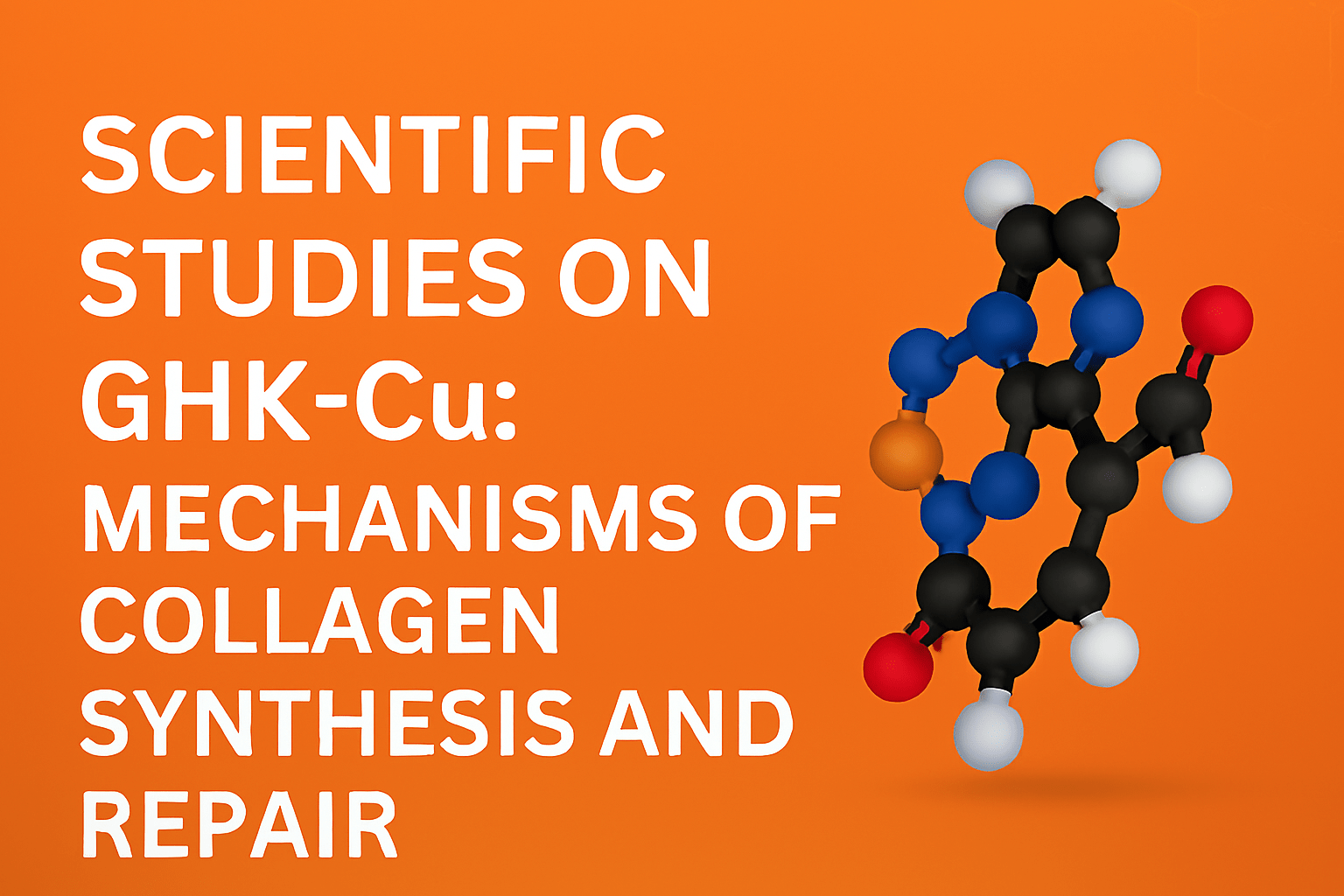
GHK-Cu, or glycyl-L-histidyl-L-lysine copper peptide, has become a key topic in scientific and laboratory research due to its reported effects on collagen synthesis and tissue repair. Preclinical studies have explored how this naturally occurring copper-binding peptide may promote biological processes associated with structural support in skin, connective tissue, and wound healing models.
GHK-Cu and Collagen Synthesis: Preclinical Observations
Collagen is a structural protein that plays a significant role in skin elasticity and tissue strength. Laboratory studies have shown that GHK-Cu may stimulate fibroblasts—the cells responsible for producing collagen—and potentially upregulate genes associated with extracellular matrix repair. These observations provide a framework for understanding the mechanisms of tissue regeneration in experimental settings.
Key Findings from Research Models
- Fibroblast Activation: GHK-Cu has been observed to increase fibroblast production in cell culture studies.
- Collagen-Regulating Gene Expression: Preclinical data indicates that GHK-Cu modulates genes involved in collagen and glycosaminoglycan synthesis.
- Wound Healing Enhancement: Animal studies have documented accelerated tissue repair in subjects treated with GHK-Cu when compared to controls.
- Copper-Mediated Signaling: The copper-binding nature of GHK-Cu may help support enzymatic activities essential for collagen stabilization and cross-linking.
How GHK-Cu Works: Mechanistic Insights
When bonded with copper ions, GHK-Cu may influence several cellular pathways related to tissue repair and regeneration. Preclinical research suggests that its actions are linked to:
- Gene Activation: GHK-Cu has been shown to modulate gene expression related to collagen and elastin production.
- Cell Proliferation: Research proposes that it may stimulate growth of cells responsible for maintaining tissue integrity.
- Antioxidant Response: GHK-Cu may help reduce oxidative stress by activating protective cellular pathways.
Laboratory-Based Research Applications
Most GHK-Cu studies take place in animal and cell culture models. These experiments simulate tissue damage to investigate how GHK-Cu interacts with cells, proteins, and enzymes vital to repair.
These preclinical studies provide a scientific basis for future exploration, but they have not yet translated into approved or validated human applications. All findings are strictly intended for laboratory and educational use.
Research Context Overview
- In Vitro Studies: Used to observe cellular responses in a controlled environment.
- In Vivo Animal Models: Employed to understand how GHK-Cu may affect tissue repair under living biological conditions.
- Focus on Mechanisms: Research is designed to isolate specific processes such as collagen regulation, angiogenesis, and antioxidant support.
Scientific Focus on Copper-Peptide Complexes
Scientists are particularly interested in the GHK-Cu complex due to copper’s known role in physiological functions such as enzymatic activity and tissue repair. The peptide may serve as a transporter for copper ions, allowing for localized delivery and cellular uptake in tissue regeneration models.
Collagen Repair in the Context of GHK-Cu
In controlled studies, GHK-Cu has been associated with increased mRNA levels for collagen-related genes, helping to reconstruct damaged connective tissues. Laboratory results suggest that:
- Collagen production may increase in response to GHK-Cu exposure.
- Enzymes involved in collagen cross-linking, like lysyl oxidase, may be activated in vitro.
- GHK-Cu may help balance collagen breakdown and synthesis in aging tissue models.
Limitations of Current Research
All findings on GHK-Cu and collagen synthesis are based on preclinical, non-human studies. While the data illustrates potential applications in tissue repair and regeneration, no clinical claims or human use assertions are made at this time. GHK-Cu is intended solely for research purposes.
Conclusion: GHK-Cu as a Study Model for Collagen Biology
GHK-Cu continues to be a valuable model for studying collagen synthesis and tissue repair in scientific research. Laboratory evidence supports its potential to influence cellular pathways, fibroblast activity, and structural protein assembly. As research continues, GHK-Cu remains a key focus in understanding how peptides may contribute to regenerative biology.
“The GHK-Cu peptide complex serves as a promising tool for probing the mechanisms behind collagen regulation and tissue stability in preclinical models.”
– Preclinical Research Summary