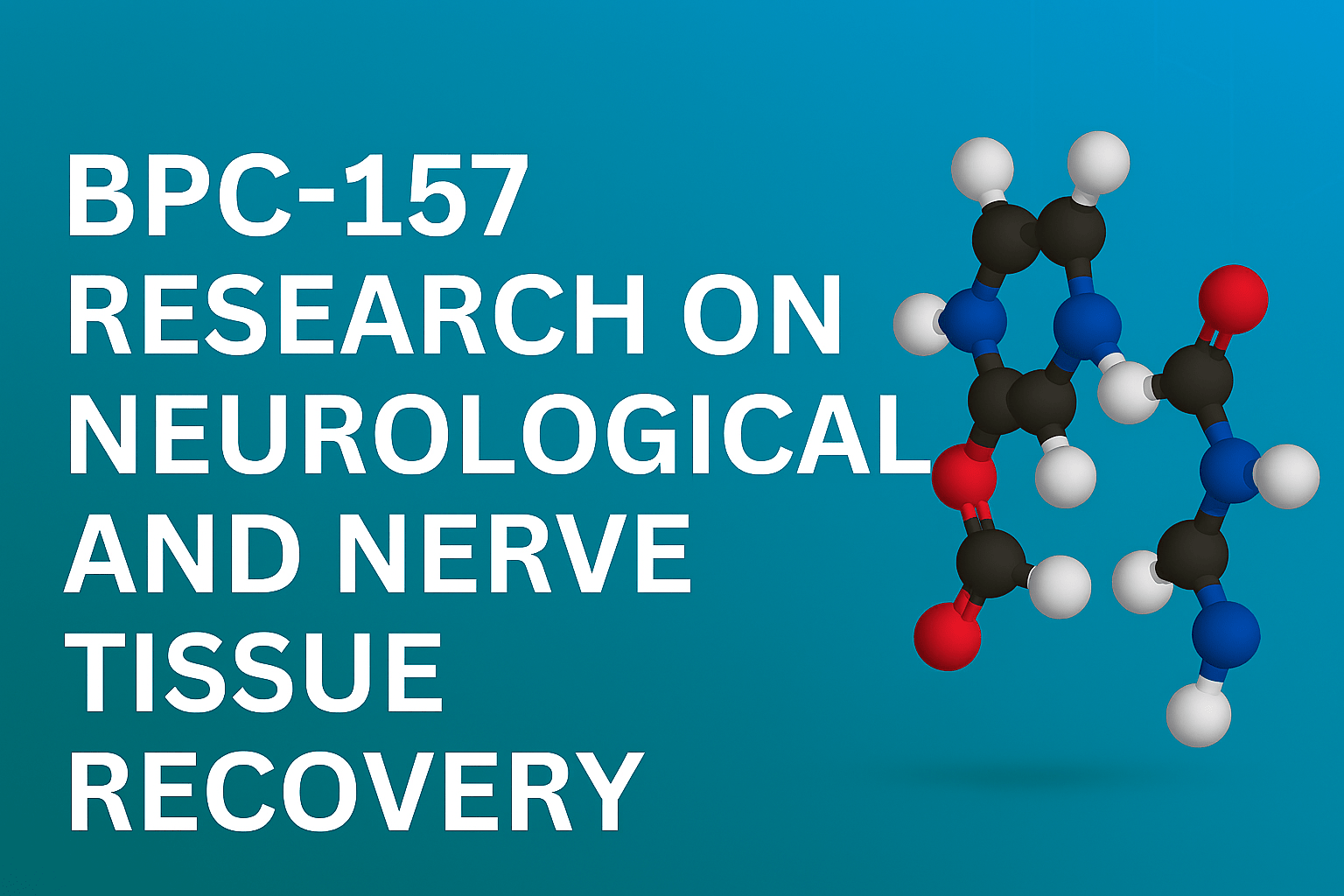
BPC-157 has attracted attention in scientific research for its potential effects on neurological and nerve tissue recovery. Most studies are preclinical, focusing on laboratory and animal models to investigate its possible role in neuroprotection and cellular repair mechanisms.
Understanding BPC-157 in Neurological Research
Researchers study BPC-157 in controlled laboratory settings to examine its influence on nerve and brain tissues. Preclinical evidence suggests it may support neuronal survival, reduce tissue damage, and enhance recovery in experimental models of nerve injury.
Key Findings from Preclinical Studies
- Nerve Tissue Recovery: Laboratory studies indicate potential support for healing in peripheral nerve injuries.
- Neuroprotection: Experimental models suggest BPC-157 may help protect neurons from cellular stress and damage.
- Angiogenesis in Neural Tissue: Research shows possible enhancement of blood vessel formation in brain and nerve tissues.
- Cellular Signaling: Studies explore how BPC-157 may influence growth factors and repair pathways in neural tissue.
Mechanisms Explored in Laboratory Studies
Scientific investigations focus on BPC-157’s effects on neuronal pathways, growth factor modulation, and cellular repair mechanisms. Laboratory models allow researchers to explore these effects without making clinical or therapeutic claims.
Applications in Preclinical Models
Most neurological studies use animal or cell models to simulate nerve injury or neurodegenerative conditions. BPC-157 is tested under controlled conditions to study its potential role in nerve regeneration, cellular protection, and recovery pathways.
Considerations for Scientific Research
- Preclinical Evidence: Research is largely conducted in laboratory or animal models.
- Mechanistic Insights: Focus is on cellular repair, neuroprotection, and signaling pathways.
- Controlled Experiments: Findings are based on experimental setups, not human clinical applications.
- Future Research: Data provide a foundation for continued laboratory investigations in nerve and brain tissue recovery.
Why BPC-157 Remains a Research Focus
BPC-157 continues to be studied due to its reported effects on neuronal recovery and neuroprotection. Preclinical studies provide insights into how cellular repair mechanisms and growth factor pathways may be influenced in neural tissue.
- Experimental Insights: Provides a model for studying nerve tissue repair and neuroprotection.
- Scientific Transparency: Research remains strictly preclinical with no human claims.
- Guiding Future Studies: Preclinical data inform hypotheses for future neurological research.
Research Limitations
Current studies are preclinical, and human therapeutic applications of BPC-157 have not been validated. All information is intended strictly for scientific research and educational purposes.
How Researchers Conduct Experiments
In neurological research, BPC-157 is applied in laboratory settings under controlled conditions. Experiments focus on neuron survival, tissue recovery, and cellular signaling, ensuring reproducibility and scientific rigor.
“BPC-157 serves as a valuable preclinical tool for exploring nerve tissue recovery, neuroprotection, and cellular repair pathways in controlled laboratory environments.”
– Peer-Reviewed Research Summary
Conclusion: BPC-157 in Neurological Research
Ongoing preclinical studies continue to investigate BPC-157’s potential role in nerve tissue recovery and neuroprotection. Laboratory findings provide valuable insights into cellular repair, angiogenesis, and neuroprotective pathways, strictly within research contexts.