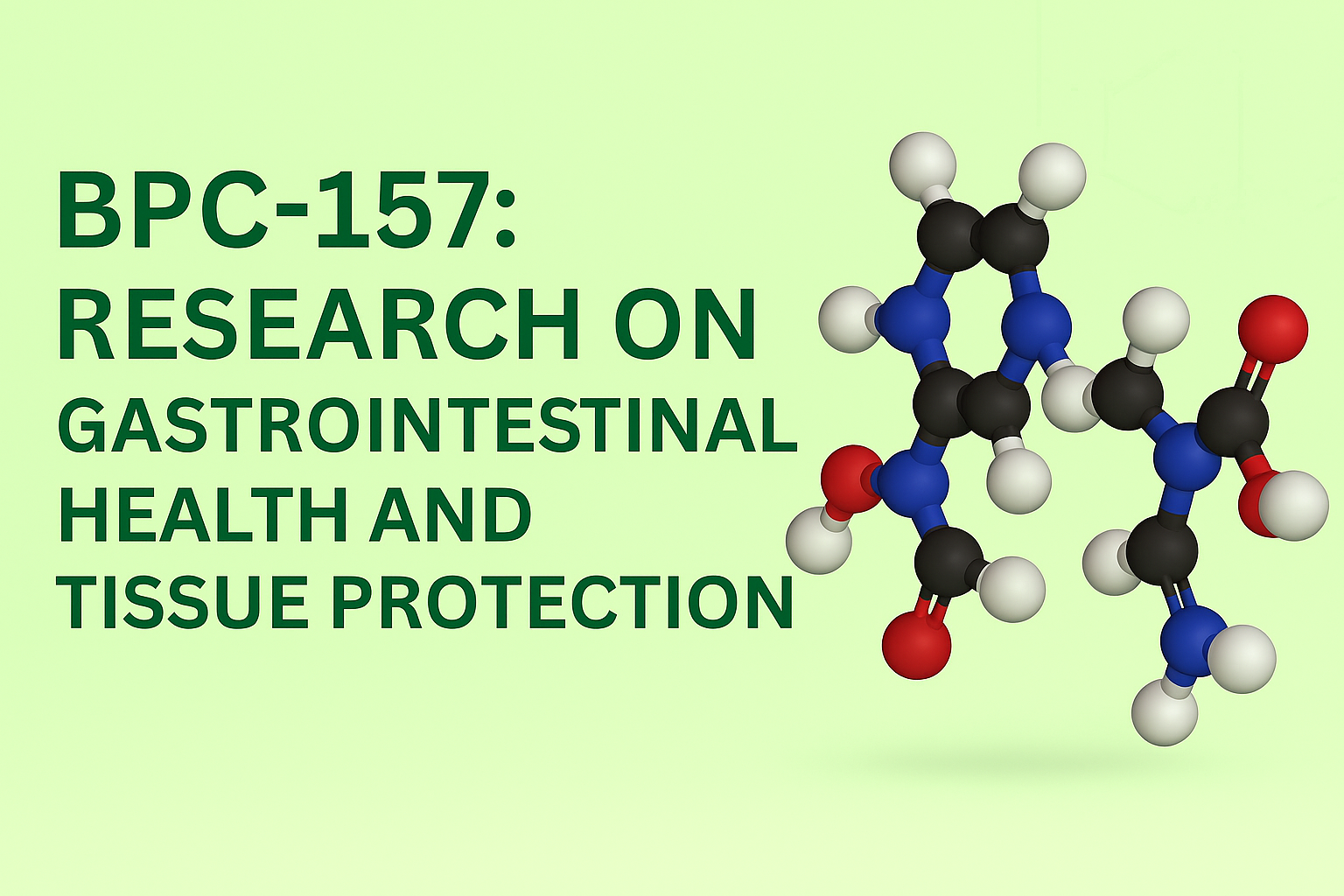
BPC-157 has been a topic of interest in scientific research for its potential role in gastrointestinal (GI) tissue protection and repair. Most studies are preclinical, examining the peptide’s effects on intestinal lining, ulcers, and other digestive tissues in laboratory models.
Understanding BPC-157 in Gastrointestinal Studies
Researchers study BPC-157 in controlled laboratory settings to understand its interaction with GI tissues. Experimental evidence suggests it may influence angiogenesis, mucosal healing, and inflammatory pathways in animal models, providing insights into potential tissue protective mechanisms.
Key Findings from Preclinical Research
- Ulcer Healing: Laboratory studies indicate accelerated recovery of gastric and duodenal ulcers in preclinical models.
- Intestinal Barrier Support: Research suggests BPC-157 may help maintain the integrity of the gut lining under stress conditions.
- Anti-Inflammatory Effects: Experimental data indicate modulation of inflammation in gastrointestinal tissues.
- Angiogenesis and Tissue Repair: Studies show enhanced blood vessel growth, which supports nutrient delivery and healing processes in the gut.
Mechanisms Explored in Laboratory Studies
Scientific investigations focus on how BPC-157 may influence growth factors, inflammatory signals, and cell regeneration pathways in digestive tissues. Preclinical models allow researchers to isolate these effects without making medical claims for human use.
Applications in Experimental Models
Most BPC-157 GI studies use animal models to simulate digestive tissue injury. Researchers examine healing rates, tissue regeneration, and cellular repair to understand its potential applications in laboratory conditions. All findings are strictly research-focused.
Considerations for Scientific Research
- Preclinical Evidence: Studies are primarily in laboratory or animal models.
- Mechanistic Insights: Focus is on cellular pathways, tissue repair, and inflammation modulation.
- Controlled Experiments: Findings reflect structured experimental conditions, not human clinical outcomes.
- Research Potential: Data provide a foundation for further laboratory investigations.
Why BPC-157 Remains a Research Subject
BPC-157 continues to be studied for its reported effects on gastrointestinal tissue healing and repair. Preclinical research contributes to understanding cellular mechanisms that may inform future scientific exploration.
- Experimental Insights: Allows study of tissue repair and protective pathways.
- Scientific Transparency: Research remains within laboratory settings without clinical claims.
- Guiding Future Research: Findings help shape hypotheses for new studies in digestive tissue repair.
Research Limitations
It is important to note that BPC-157 research is preclinical. Human applications have not been validated, and all information is intended for scientific study and educational purposes only.
How Researchers Conduct Experiments
In gastrointestinal studies, BPC-157 is applied under controlled laboratory conditions to examine its effects on tissue repair, inflammation, and cellular recovery. Protocols prioritize reproducibility, accuracy, and scientific rigor.
“BPC-157 provides a valuable preclinical model to study gastrointestinal tissue repair, angiogenesis, and cellular healing mechanisms.”
– Peer-Reviewed Research Summary
Conclusion: BPC-157 in GI Research
Research continues to explore BPC-157’s role in gastrointestinal tissue protection and repair. Preclinical findings provide insights into mechanisms of healing, inflammation modulation, and cellular recovery, strictly within laboratory research contexts.