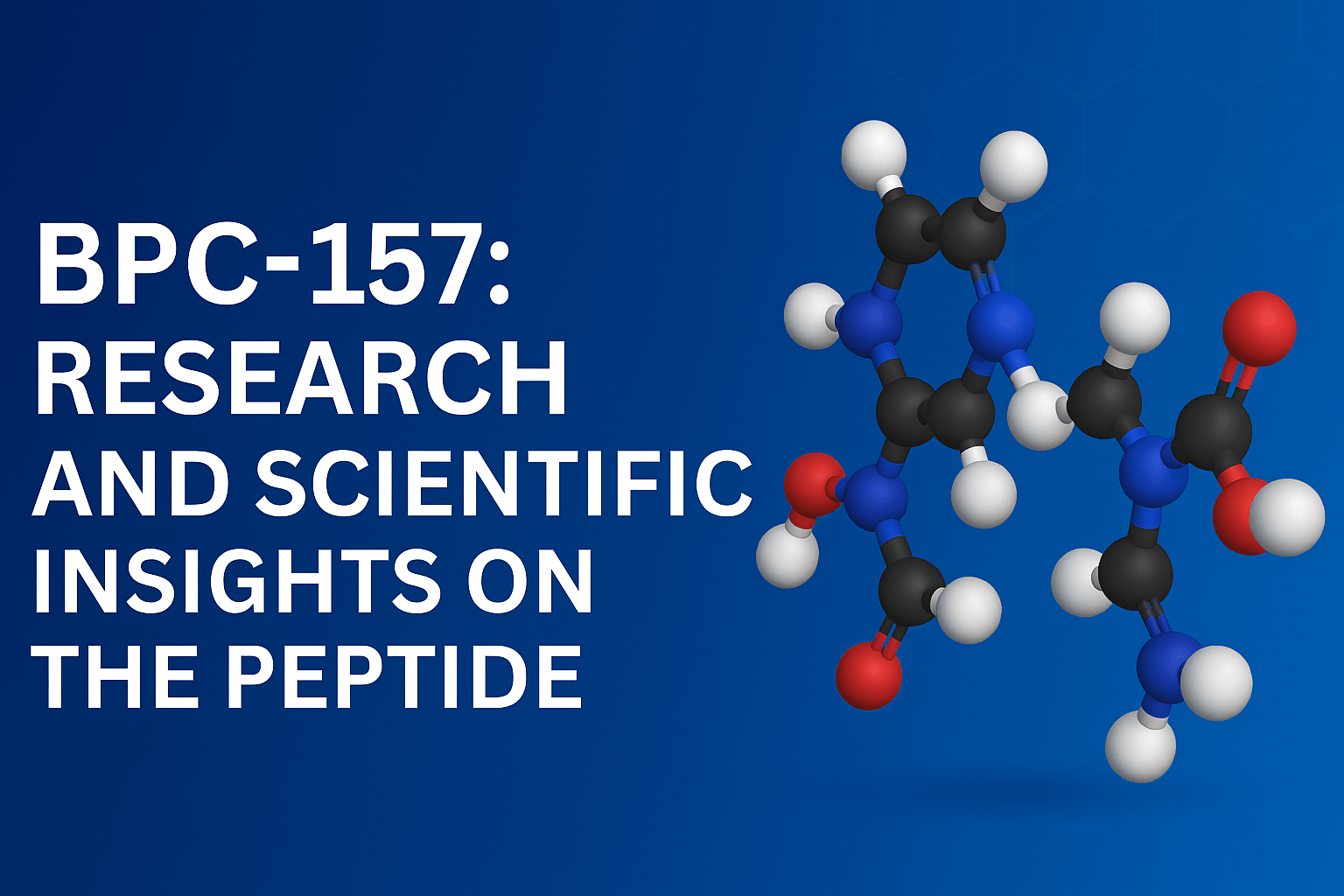
BPC-157 is a peptide widely studied in scientific research for its potential biological effects. This naturally occurring peptide fragment has drawn attention in laboratory studies for its interactions with tissues, cells, and certain molecular pathways. While research is ongoing, the scientific literature continues to explore the mechanisms of BPC-157 in various contexts, making it an important topic for anyone interested in peptide science.
Understanding BPC-157
BPC-157, short for Body Protection Compound 157, is derived from a protein found in the human stomach. Researchers have focused on its potential influence on tissue repair, cellular signaling, and protective functions in animal models and in vitro studies. Its chemical structure consists of 15 amino acids, and its stability in laboratory settings has allowed for detailed investigation.
Mechanisms Explored in Research
- Tissue Interaction: Studies examine how BPC-157 may interact with connective tissues and support certain cellular processes.
- Angiogenesis: Research investigates its possible role in blood vessel formation in experimental models.
- Neuroprotective Potential: Some studies suggest effects on neuronal pathways in preclinical settings.
- Gastrointestinal Interactions: Laboratory studies explore how BPC-157 may influence digestive tissue integrity and healing processes.
Research Findings from Peer-Reviewed Studies
Published research has primarily focused on laboratory and animal studies. Findings have provided insights into:
- Cellular signaling pathways influenced by BPC-157.
- Potential protective effects in connective tissues and organs.
- Interactions with specific neurotransmitter and growth factor systems.
- Its stability in aqueous solutions and laboratory models, which supports reproducible study designs.
Experimental Contexts
Most research is conducted under controlled laboratory conditions, including in vitro cell studies and in vivo animal models. These studies aim to understand the peptide’s biological properties and potential mechanisms without making clinical claims for humans. BPC-157 research is part of a broader scientific effort to study peptide interactions with tissues and cellular systems.
Safety and Regulatory Notes
While BPC-157 is studied extensively in laboratories, it is important to note that research is ongoing, and clinical guidelines for human use have not been established. Scientific publications focus on controlled experiments rather than clinical applications, and regulatory agencies have not approved it for treatment purposes.
How BPC-157 Contributes to Scientific Knowledge
The peptide provides a valuable model for understanding tissue interactions, cellular signaling, and molecular biology. Researchers use BPC-157 to examine potential pathways for tissue protection and cellular function, helping to advance the broader field of peptide science.
Key Takeaways from Research
- Research is primarily preclinical, including in vitro and animal studies.
- Mechanisms involve cellular pathways, tissue interactions, and signaling molecules.
- Studies provide insights into potential biological effects, but human applications remain under investigation.
- Scientific exploration of BPC-157 contributes to peptide biology and experimental medicine research.
Future Directions in BPC-157 Research
Ongoing studies continue to explore how BPC-157 interacts with tissues and cells under laboratory conditions. Scientists are investigating additional molecular pathways, tissue types, and mechanisms of action. This research may help inform broader understanding of peptide biology, tissue repair models, and potential therapeutic strategies in preclinical contexts.
Conclusion
BPC-157 remains a focus of laboratory and preclinical research. Its study contributes to scientific understanding of peptide mechanisms, tissue interactions, and cellular pathways. While research is ongoing and human applications are not established, the peptide provides a valuable model for exploring the complex biology of small peptides in controlled experiments.
“Scientific research into peptides like BPC-157 helps expand our understanding of molecular biology and tissue interactions, providing a foundation for future studies.”
– Peer-reviewed research consensus